RabbitMQ Management UI vs QueueExplorer
An honest, feature-by-feature comparison of RabbitMQ Management UI and QueueExplorer: message browsing, dead letters, live traffic, platforms and pricing.
Quick verdict
The Management UI administers the broker. QueueExplorer works on messages: progressive loading, filtering, editing and moving them. They solve different problems, and QueueExplorer still needs the management plugin for RabbitMQ.
At a glance
| RabbitMQ Management UI | QueueExplorer | |
|---|---|---|
| Type | Web UI | Desktop app |
| Runs on | Any browser | Windows, macOS, Linux |
| Price | Free (bundled with RabbitMQ) | $149 per computer (Standard) or $249 (Professional) |
| Open source | Yes (MPL 2.0) | No |
| Made by | RabbitMQ team (Broadcom) | Cogin |
| Best for | Broker administration (users, permissions, policies) and quick checks when nothing else is installed. | Teams working with several message brokers, or who need heavy message editing and stream browsing. |
Feature by feature
| Capability | Management UI | QueueExplorer |
|---|---|---|
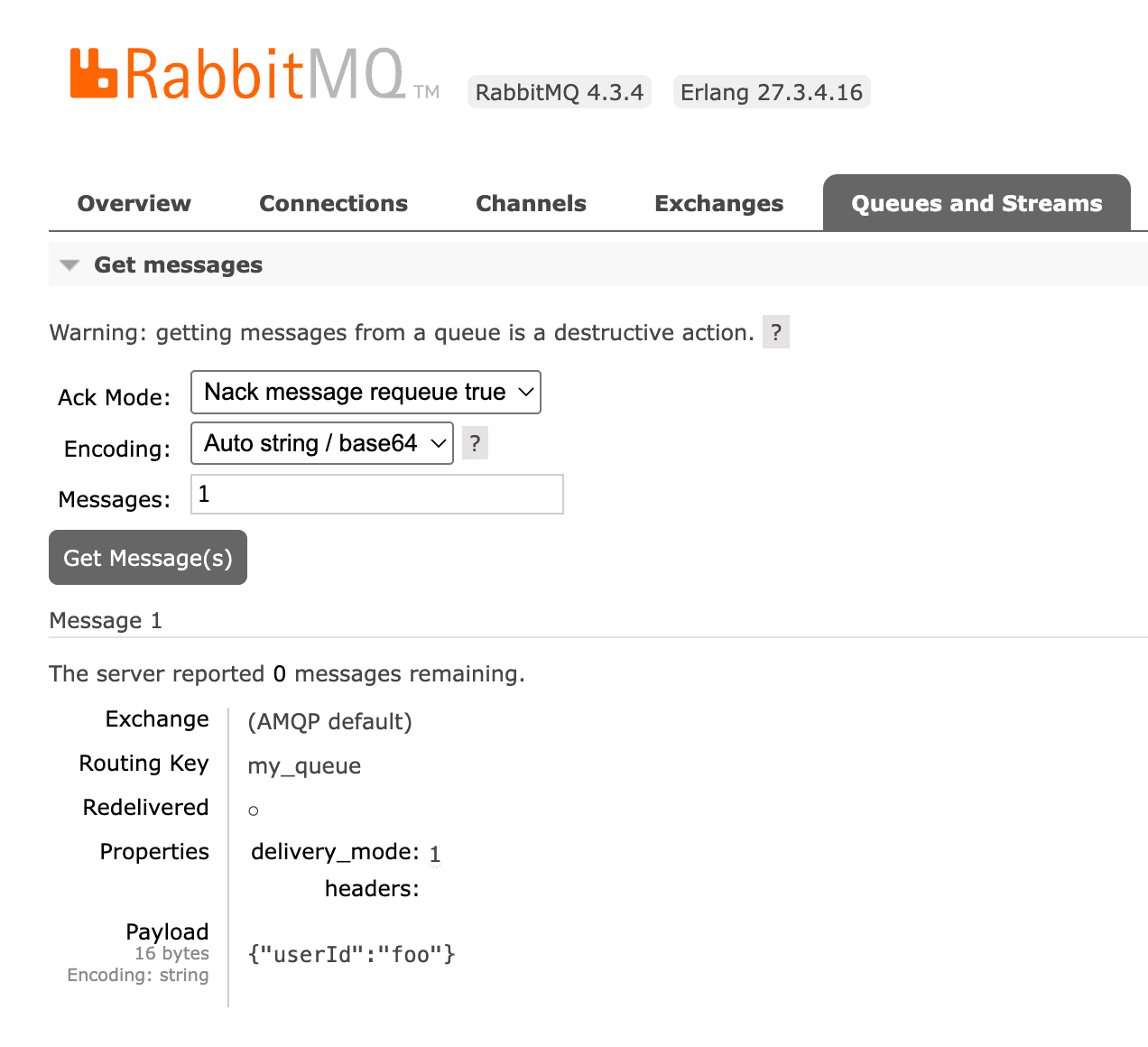
| Browse messages safelyLook at the messages sitting in a queue without losing them or disturbing consumers. | Partly"Get messages" consumes messages and optionally requeues them, which changes order and redelivery flags | YesProgressive loading with a configurable limit, streams by offset |
| Search & filter messagesFind specific messages by body, headers or properties instead of paging through them one by one. | NoNo message search or filtering | YesFilter loaded messages, Professional extracts values with JSON, XPath or regex |
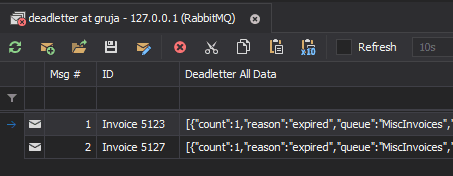
| Replay dead lettersRe-publish failed or dead-lettered messages back to a queue or exchange. | PartlyOnly with the shovel plugin ("Move messages"), whole queue at a time | YesInspect dead-letter headers and replay |
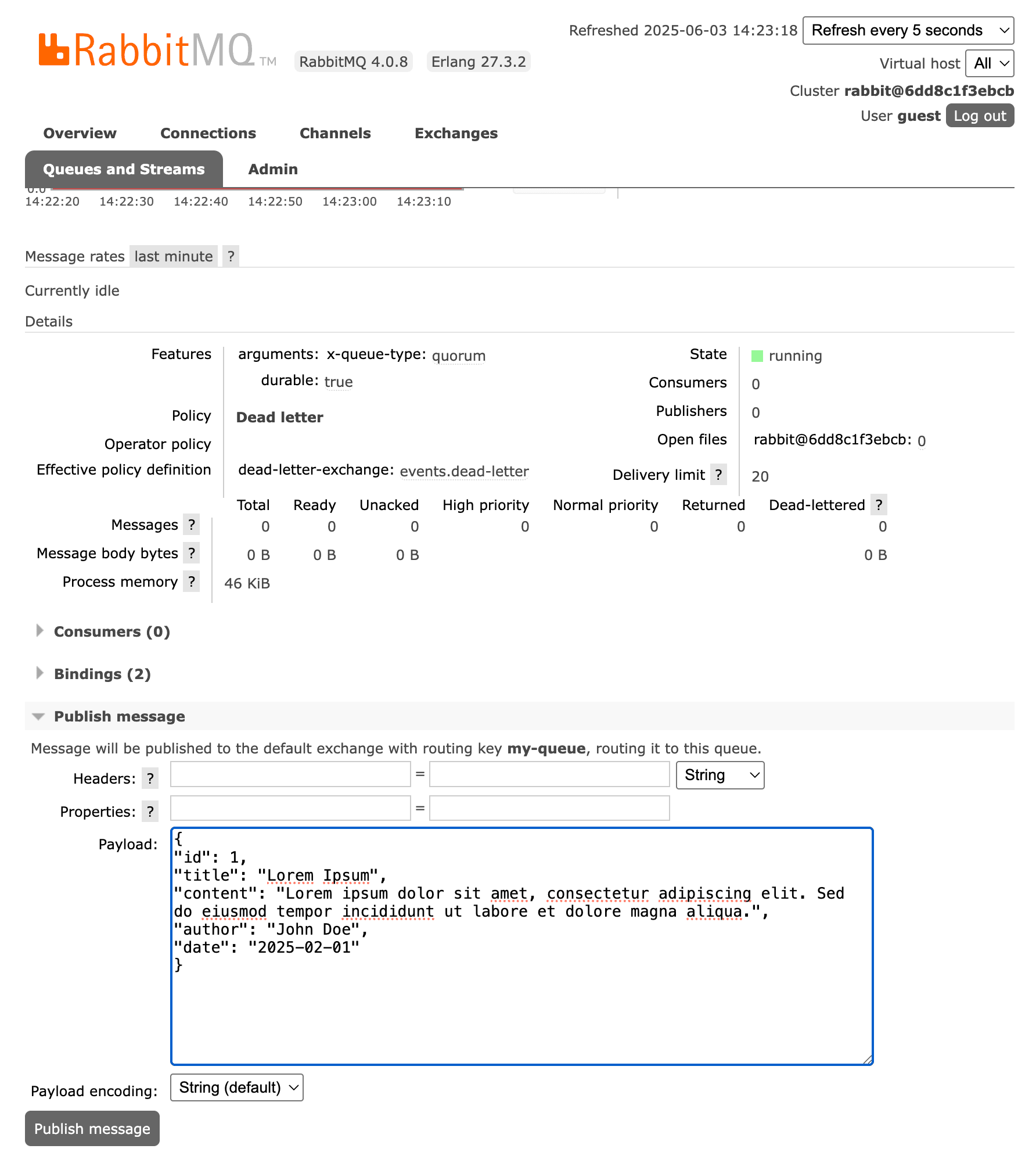
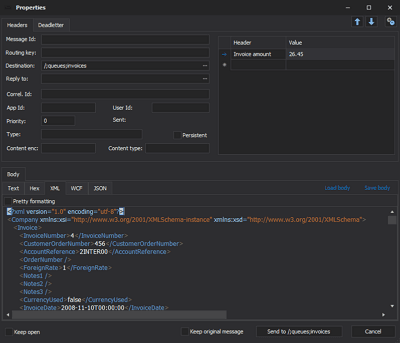
| Publish test messagesSend a message with custom headers and properties by hand. | YesBasic form with headers and properties | YesEdit or create messages and send them to a queue or exchange |
| Watch live trafficSee messages as they flow through a queue without consuming them. | No | Not documented |
| Visual routing graphSee how exchanges, bindings, dead-letter and alternate exchanges connect. | PartlyBindings listed per exchange or queue, no graph | Not documented |
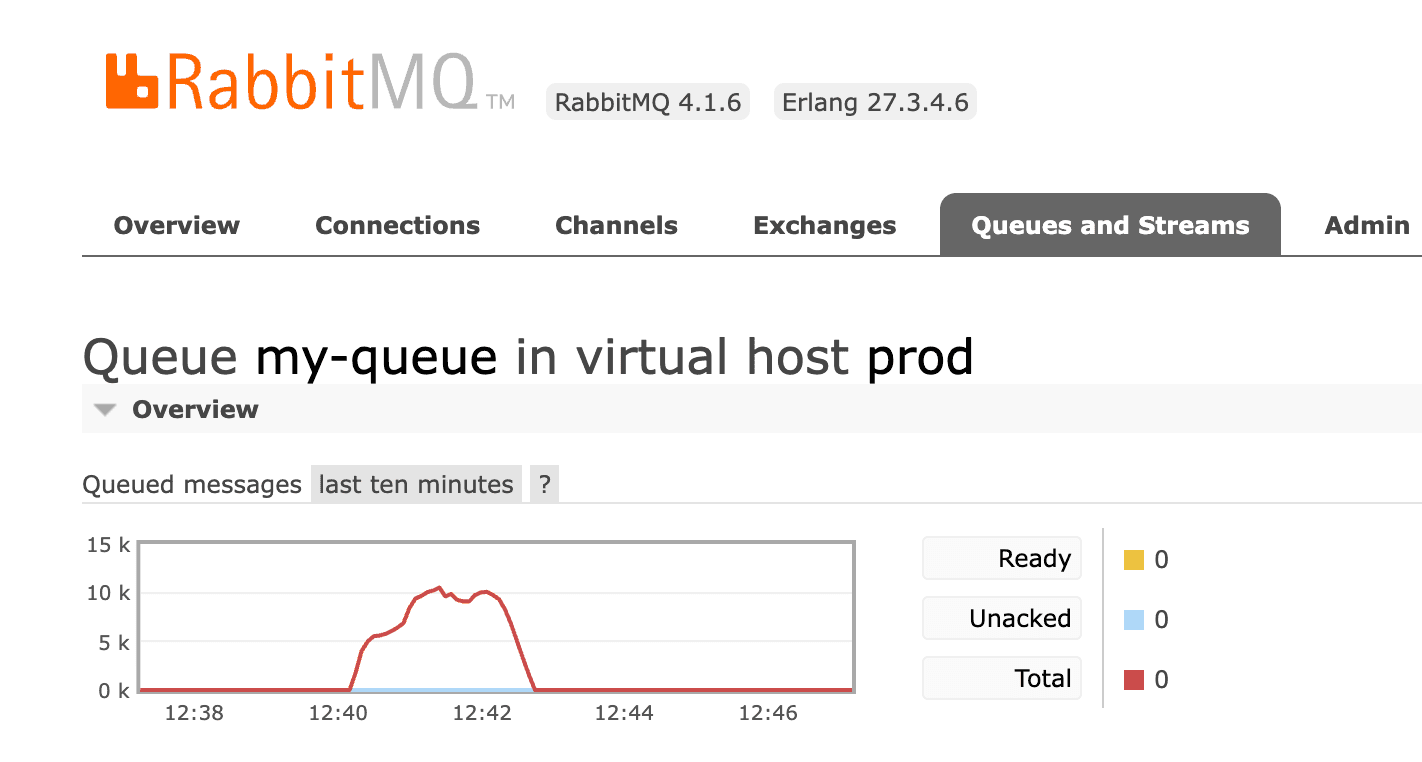
| Metrics & chartsMessage rates, queue depth and other time series. | YesBasic rate and depth charts | PartlyMonitoring is a separate product (QueueMonitor) |
| Backlog drain forecastEstimate when a queue backlog will be empty. | No | Not documented |
| Many brokers in one placeSwitch between local, staging and production brokers without re-entering credentials. | NoOne broker per browser tab, log in to each | YesServers organized in groups |
| Bulk actionsAct on many queues or messages at once (purge, delete, move). | No | YesCopy, move, delete or save selected messages |
| Policy debuggingUnderstand which policy applies to a queue and why. | PartlyShows the effective policy of each queue, but not why others did not match | Not documented |
| Other brokersWorks with message brokers other than RabbitMQ (Azure Service Bus, MSMQ, ActiveMQ…). | No | YesAzure Service Bus, MSMQ (Windows only), ActiveMQ |
RabbitMQ Management UI: strengths and limitations
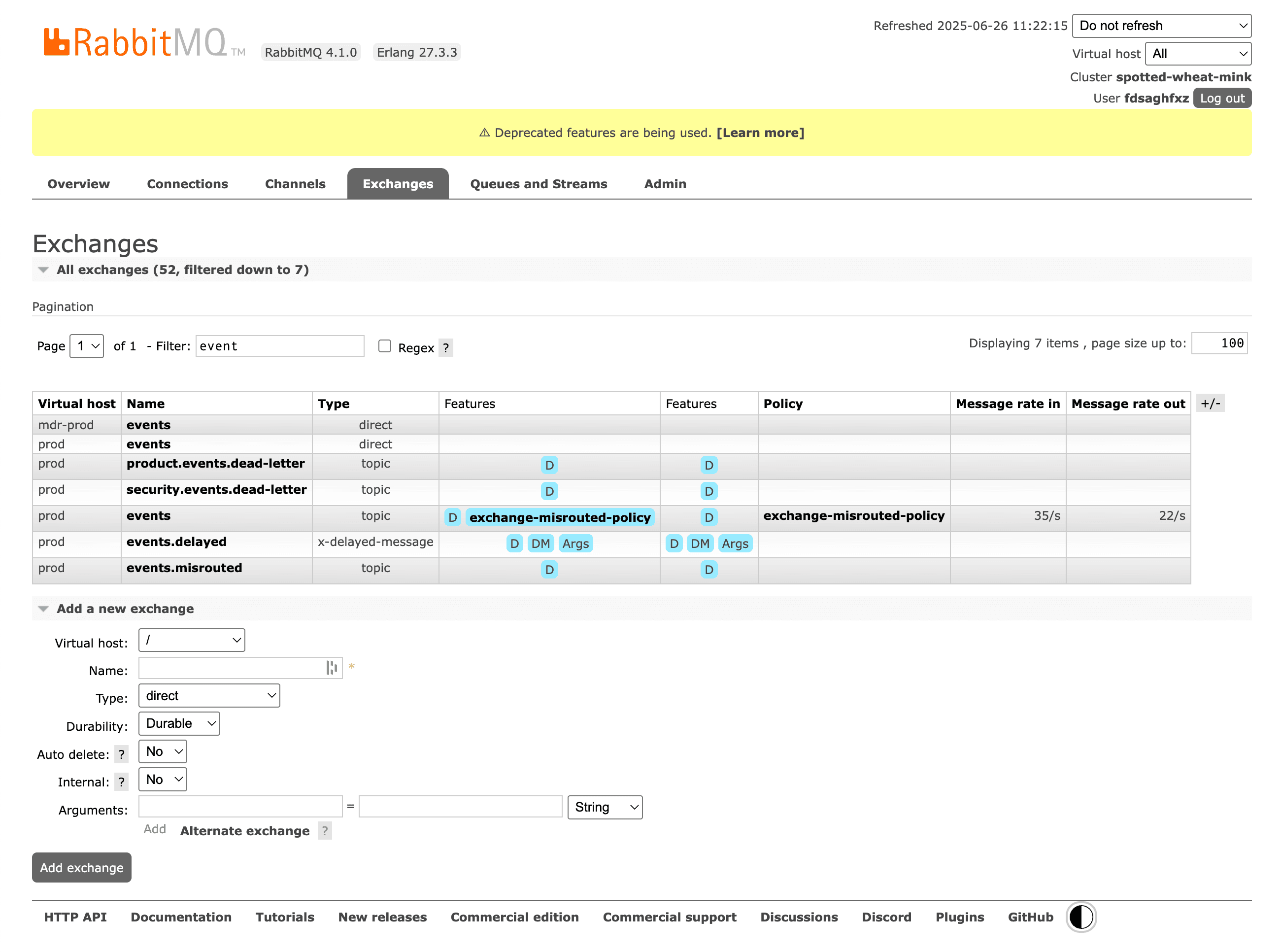
The Management UI ships with RabbitMQ as the rabbitmq_management plugin and is served on port 15672. It covers broker administration well: users, vhosts, permissions, policies, queues, exchanges, connections and basic charts.
Strengths
- Free and already installed with most RabbitMQ setups
- Complete administration: users, vhosts, permissions, policies, feature flags
- Officially maintained by the RabbitMQ team
- Works from any browser, nothing to install on your machine
Limitations
- No safe way to browse a queue: "Get messages" is a consume plus requeue
- No message search, filtering or selective replay
- One broker at a time, credentials re-entered per environment
- Slow and cluttered with thousands of queues
QueueExplorer: strengths and limitations
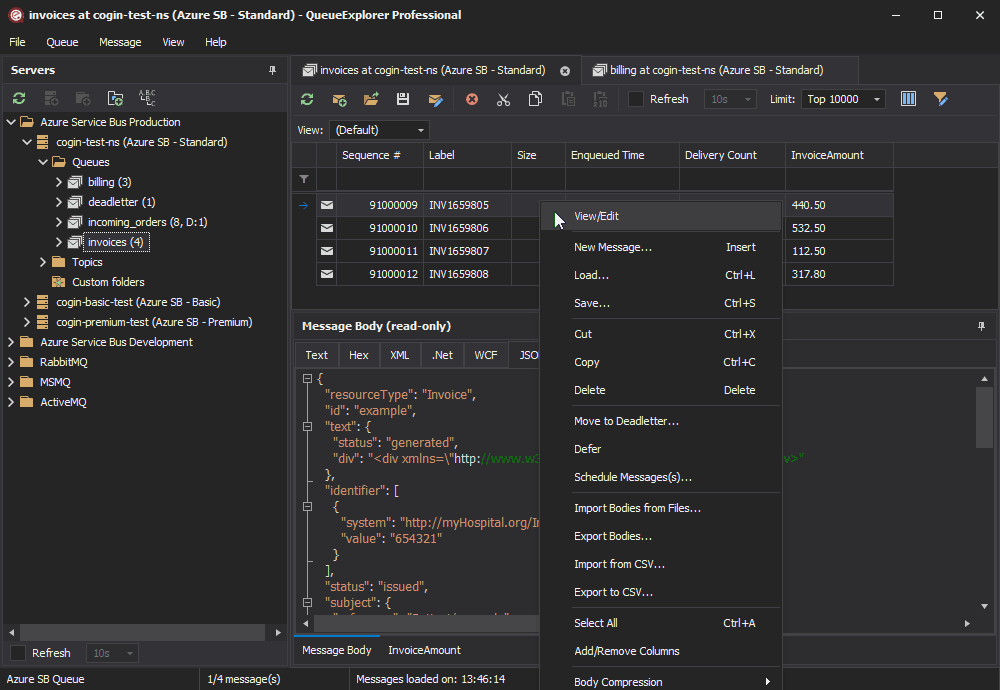
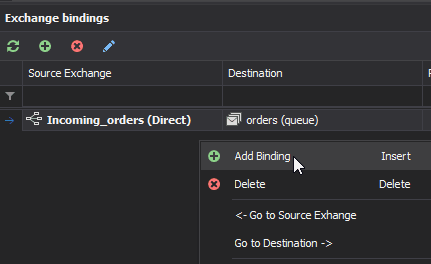
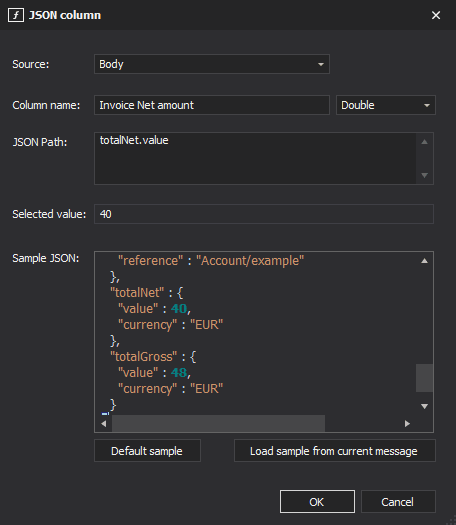
QueueExplorer by Cogin is a long-standing desktop tool for message-level work on several brokers. For RabbitMQ it loads queue messages progressively, browses streams by offset, filters on bodies and headers, and lets you edit, copy, move, save and replay messages.
Strengths
- Supports several brokers in one tool (RabbitMQ, Azure Service Bus, MSMQ, ActiveMQ)
- Mature message editing: edit, copy, move, save to files and reload
- Browses RabbitMQ streams by offset
- Free trial on every platform
Limitations
- Priced per computer: $149 (Standard) or $249 (Professional)
- Licence includes 12 months of updates, extra years are paid
- Advanced filtering (JSON/XPath/regex columns) requires Professional
- Focused on messages: no routing graph or drain forecast documented
Setup and security
RabbitMQ Management UI. Run `rabbitmq-plugins enable rabbitmq_management` (already on in the `-management` Docker images), then open http://localhost:15672. Served by the broker itself. Exposing port 15672 beyond localhost or a VPN needs TLS and proper user tags.
QueueExplorer. Install the desktop app and create a connection (host, vhost, port, credentials). A free trial is available. Desktop app that connects directly to your broker.
Pricing
- RabbitMQ Management UI: Free (bundled with RabbitMQ)
- QueueExplorer: $149 per computer (Standard) or $249 (Professional)
Should you choose Management UI or QueueExplorer?
Choose RabbitMQ Management UI if…
You need free broker administration.
Choose QueueExplorer if…
You need message-level work and can justify a per-computer licence.
A third option: RabbitGUI
If what you really need is to debug messages (browse a queue without losing anything, filter and replay dead letters, watch live traffic), RabbitGUI is a native desktop app built for exactly that. Compare it with RabbitMQ Management UI and QueueExplorer.
FAQ
Yes. Free (bundled with RabbitMQ).
No. QueueExplorer costs $149 per computer (Standard) or $249 (Professional).
Yes, each one connects to your broker independently. A common split is Management UI when you need free broker administration, and QueueExplorer when you need message-level work and can justify a per-computer licence.
RabbitMQ Management UI: yes (Any browser). QueueExplorer: yes (Windows, macOS, Linux).
QueueExplorer lets you inspect and republish dead-lettered messages, while RabbitMQ Management UI is limited (only with the shovel plugin ("move messages"), whole queue at a time).
Related comparisons
Facts last verified on 2026-11-02. Sources: RabbitMQ docs: Management Plugin, Cogin: pricing, Cogin: RabbitMQ GUI. Spotted something outdated? Email nicolas@tggl.io and we will fix it.