RabbitGUI vs RabbitScout
An honest, feature-by-feature comparison of RabbitGUI and RabbitScout: message browsing, dead letters, live traffic, platforms and pricing.
Quick verdict
RabbitScout is a free, self-hosted web dashboard: great as a shared, always-on view of one broker, but you have to deploy and secure it, and its message tooling stops at peeking and publishing. RabbitGUI is a desktop app with nothing to deploy, connects to all your environments at once, and adds a real dead-letter workflow, live spying and routing visualization.
Disclosure: we make RabbitGUI. We list where the other tool is the better choice, and every competitor fact links to its source.
At a glance
| RabbitGUI | RabbitScout | |
|---|---|---|
| Type | Desktop app | Self-hosted web dashboard |
| Runs on | macOS, Windows, Linux | Self-hosted (Node.js or Docker), any browser |
| Price | 29€ one-time, free updates forever | Free |
| Open source | No | Yes (MIT) |
| Made by | RabbitGUI | Ralve (open source) |
| Best for | Developers who debug RabbitMQ queues, messages and dead letters regularly and want a fast desktop tool. | Teams who want a free, modern, shared web dashboard and are happy to self-host it. |
Feature by feature
| Capability | RabbitGUI | RabbitScout |
|---|---|---|
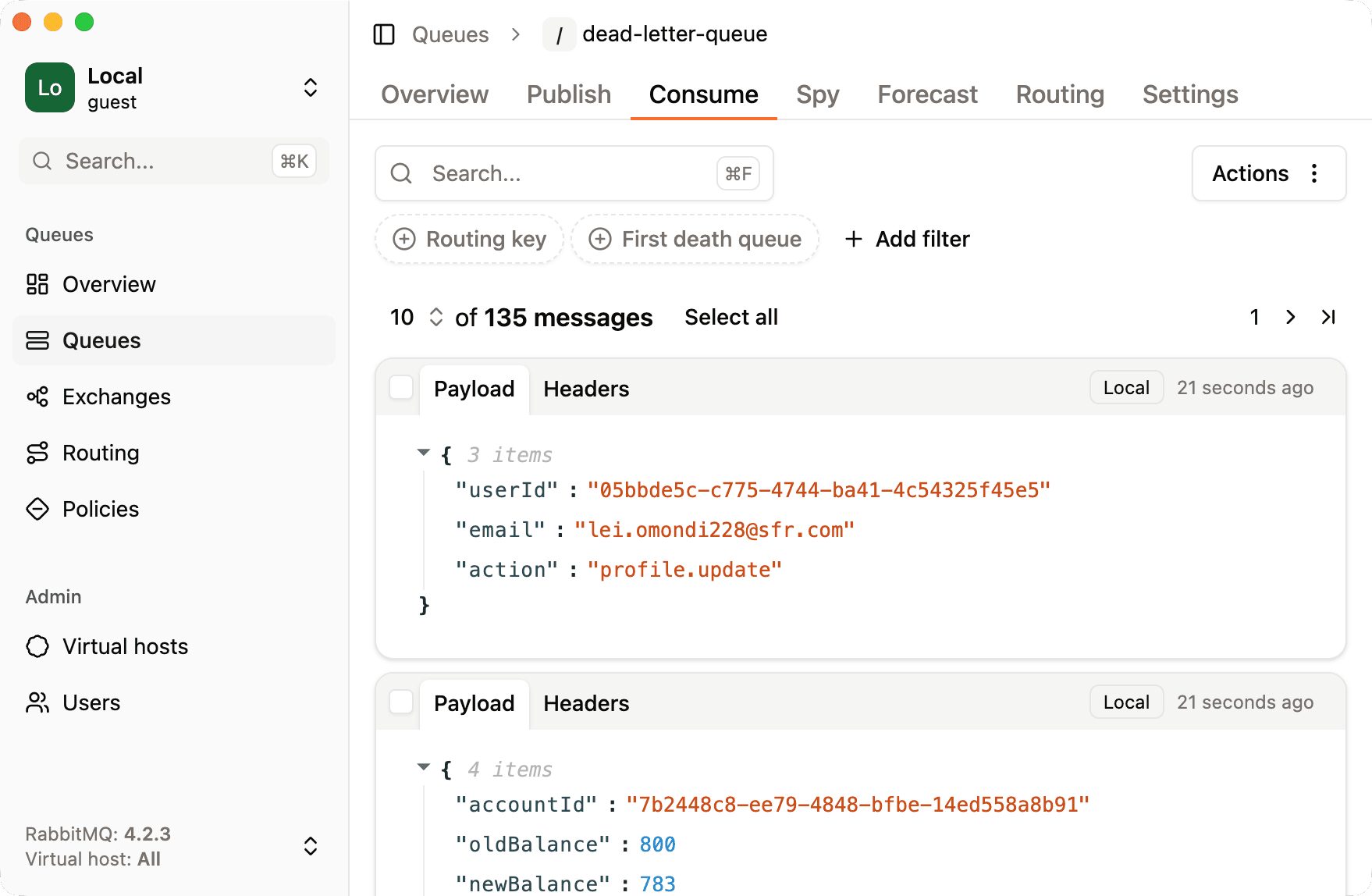
| Browse messages safelyLook at the messages sitting in a queue without losing them or disturbing consumers. | YesCopies messages to a local store, with requeue or removal, then lets you inspect them at no cost to the broker | PartlyPeek messages with pagination through the management API |
| Search & filter messagesFind specific messages by body, headers or properties instead of paging through them one by one. | YesSearch and filter extracted messages | PartlySorting of peeked messages |
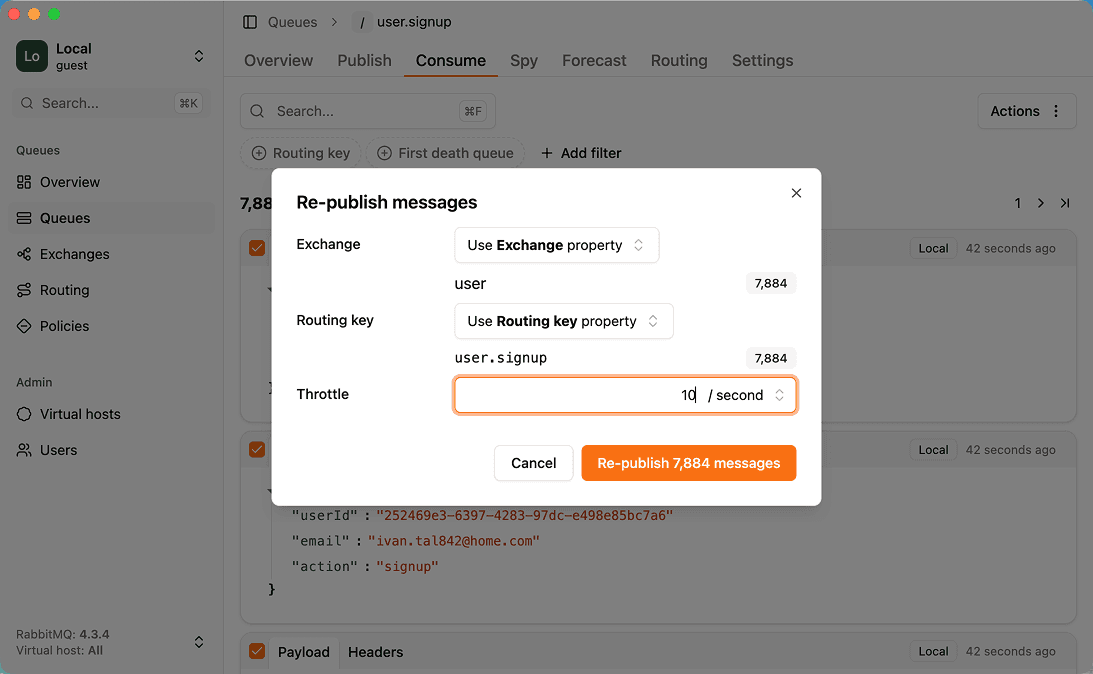
| Replay dead lettersRe-publish failed or dead-lettered messages back to a queue or exchange. | YesRepublish selected messages anywhere, with throttling | Not documented |
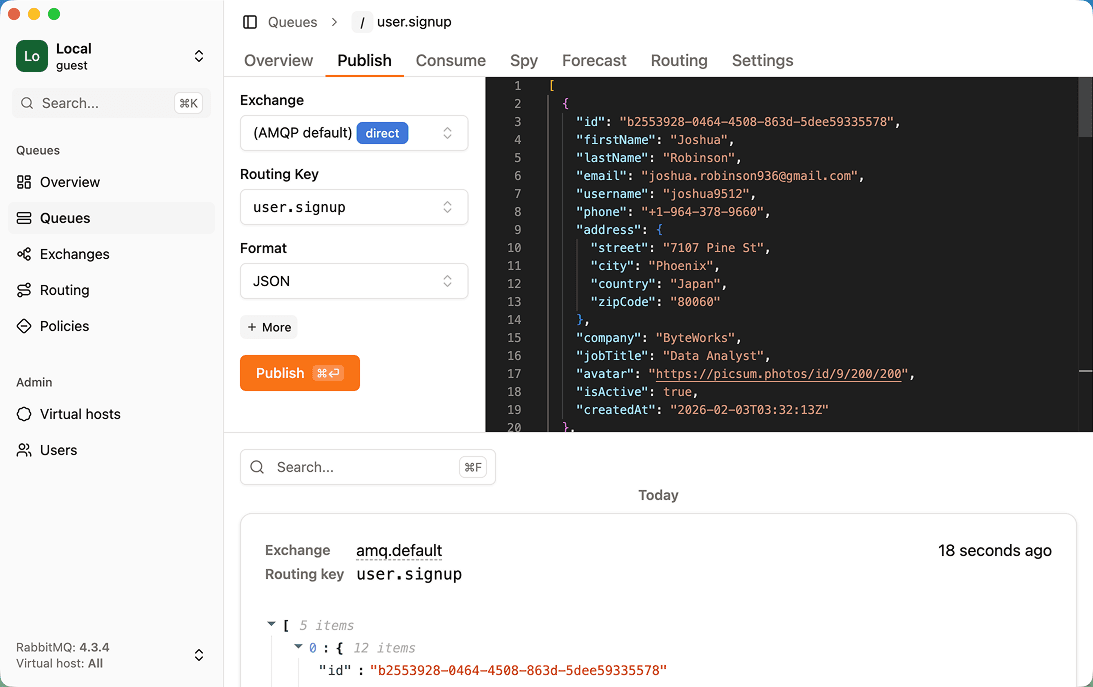
| Publish test messagesSend a message with custom headers and properties by hand. | YesVS Code-style JSON editor | YesTest messages with custom headers |
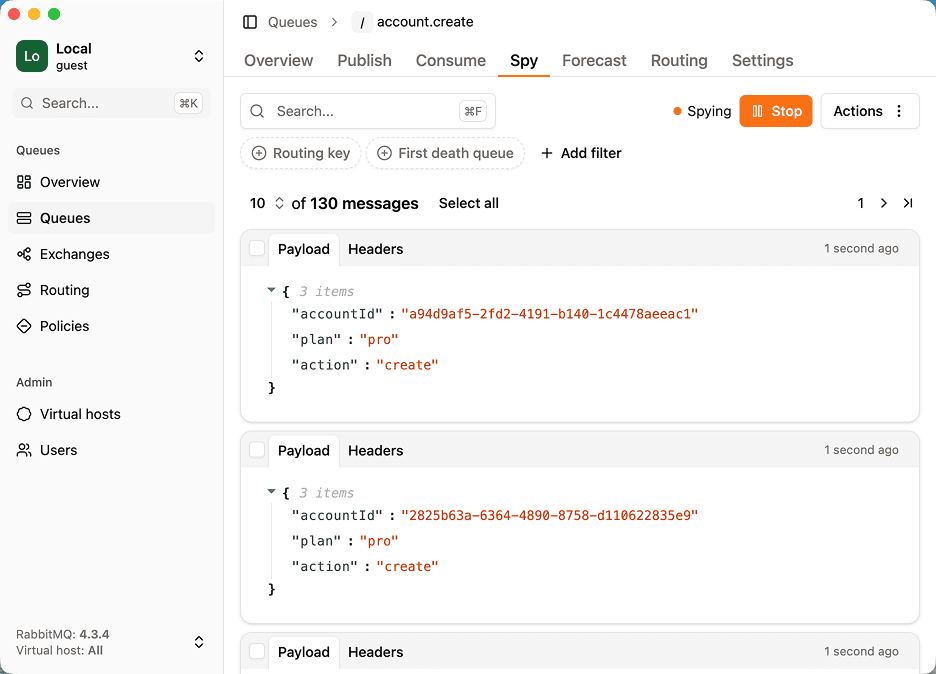
| Watch live trafficSee messages as they flow through a queue without consuming them. | YesNon-destructive spy using a temporary shadow queue | Not documented |
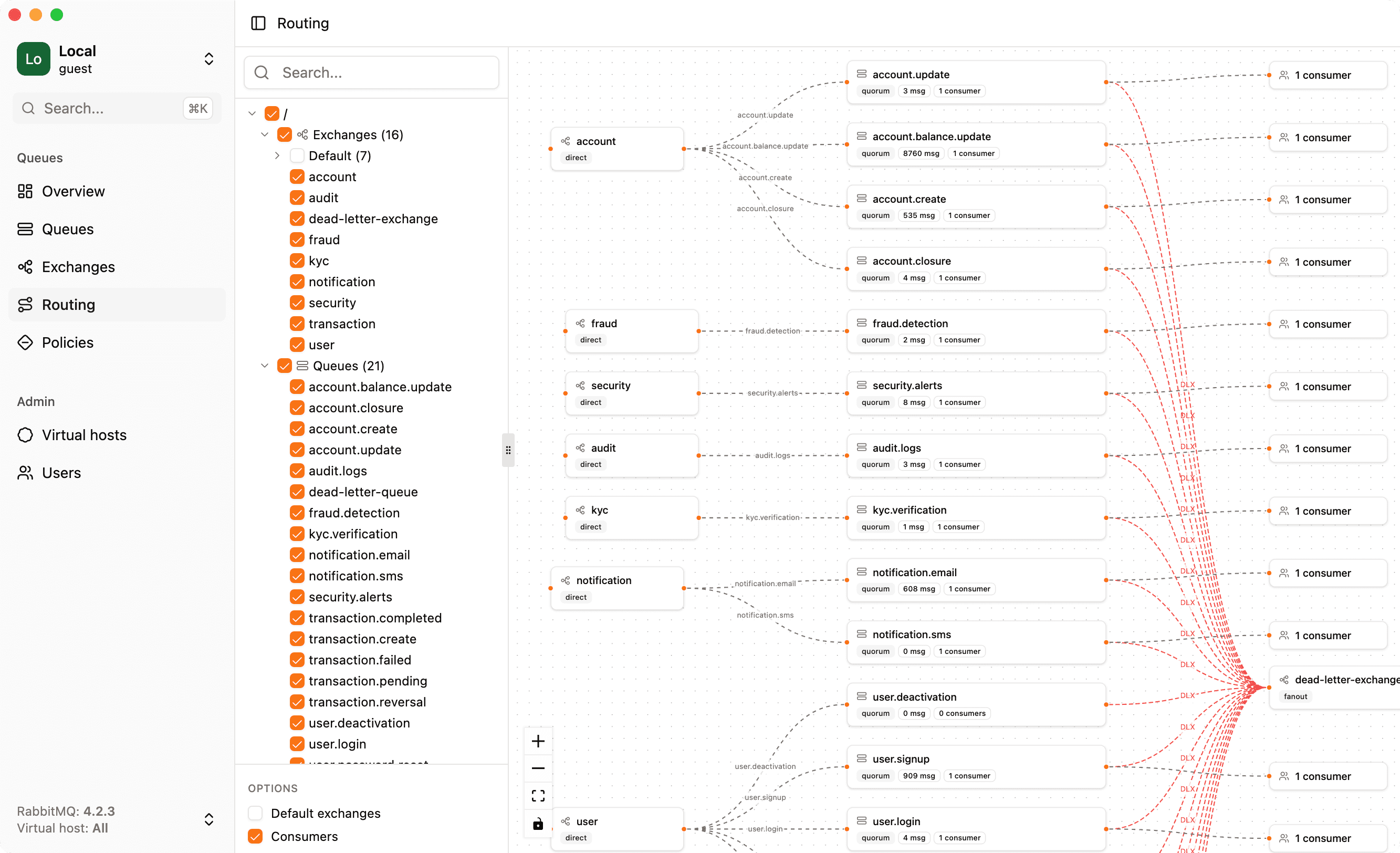
| Visual routing graphSee how exchanges, bindings, dead-letter and alternate exchanges connect. | YesInteractive graph including dead-letter and alternate exchanges | PartlyInspect and add bindings, no graph |
| Metrics & chartsMessage rates, queue depth and other time series. | YesTime series explorer with zoom | YesLive streaming charts and history up to 24h |
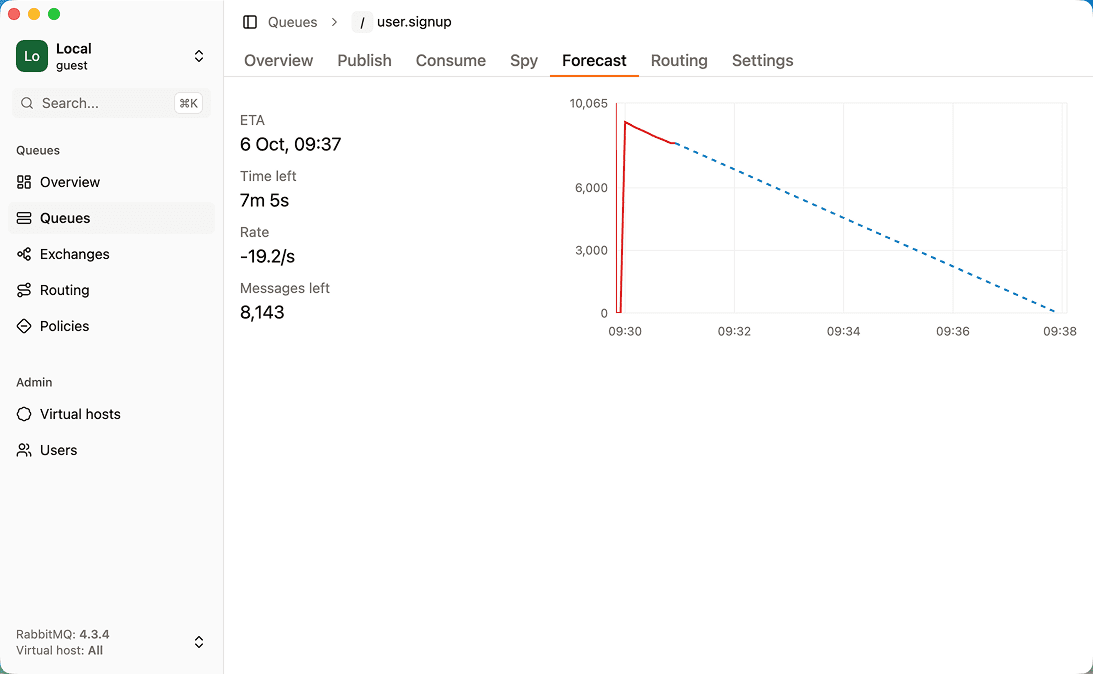
| Backlog drain forecastEstimate when a queue backlog will be empty. | YesDrain-time estimate based on linear regression | Not documented |
| Many brokers in one placeSwitch between local, staging and production brokers without re-entering credentials. | YesOne-click switching | NoOne broker per deployment |
| Bulk actionsAct on many queues or messages at once (purge, delete, move). | YesBulk purge and other bulk actions | Not documented |
| Policy debuggingUnderstand which policy applies to a queue and why. | YesDedicated policy debugger | Not documented |
| Other brokersWorks with message brokers other than RabbitMQ (Azure Service Bus, MSMQ, ActiveMQ…). | NoRabbitMQ only | No |
RabbitGUI: strengths and limitations
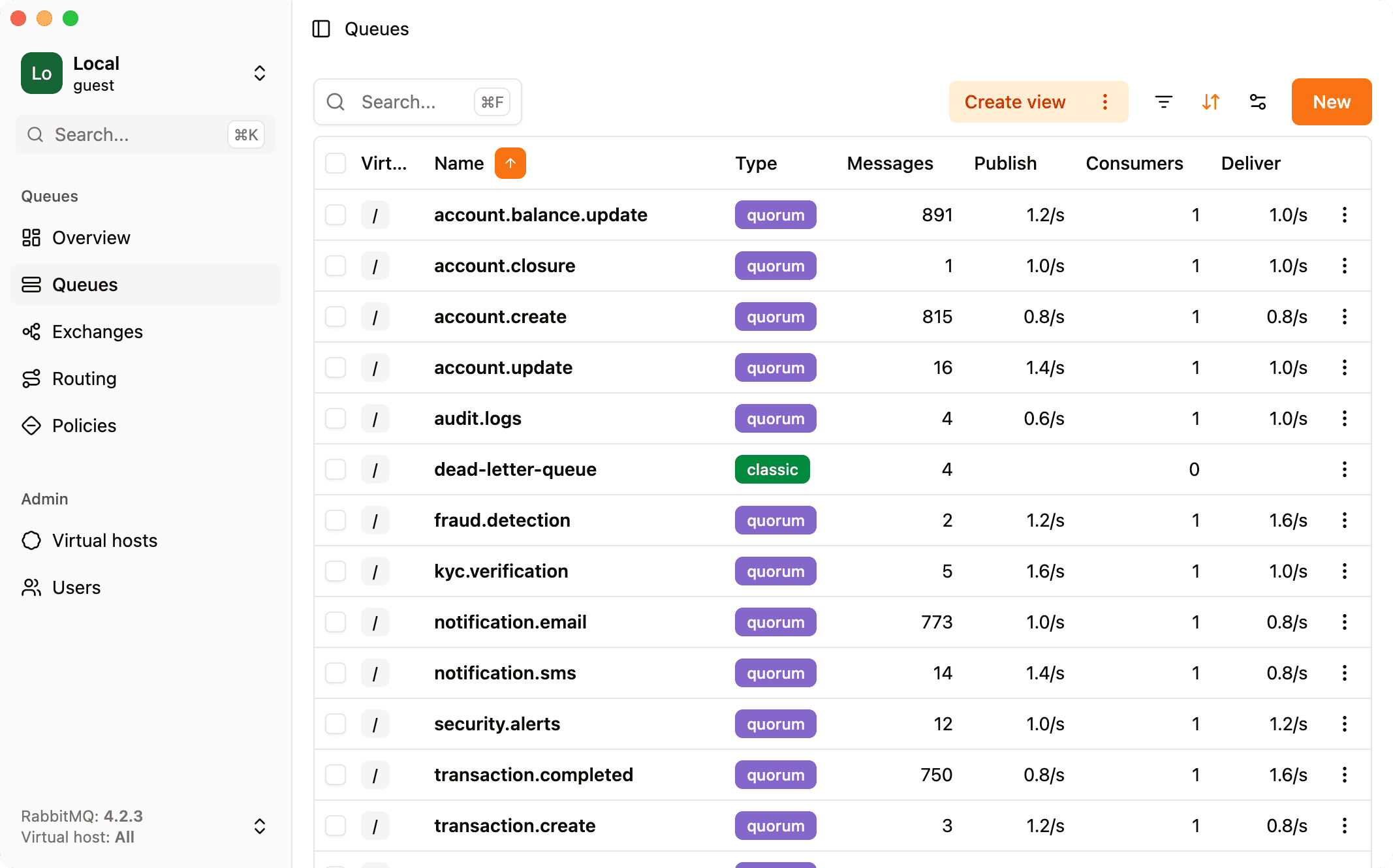
RabbitGUI is a desktop app for macOS, Windows and Linux that connects to your brokers through the management API. It focuses on day-to-day debugging: browsing and filtering messages, replaying dead letters, spying on live traffic, and visualizing routing.
Strengths
- Dead-letter workflow: inspect, filter and republish failed messages with throttling
- Non-destructive live spy on any queue
- Routing graph, drain-time forecast and policy debugger are unique among RabbitMQ tools
- Native app on macOS, Windows and Linux with nothing to deploy
- Low one-time price with free updates forever and a 30-day refund
Limitations
- Paid (no free tier or trial, a 30-day money-back guarantee instead)
- RabbitMQ only
- Needs the management plugin enabled, like most RabbitMQ tools
- Not a team-wide always-on dashboard: it runs on each developer machine
RabbitScout: strengths and limitations
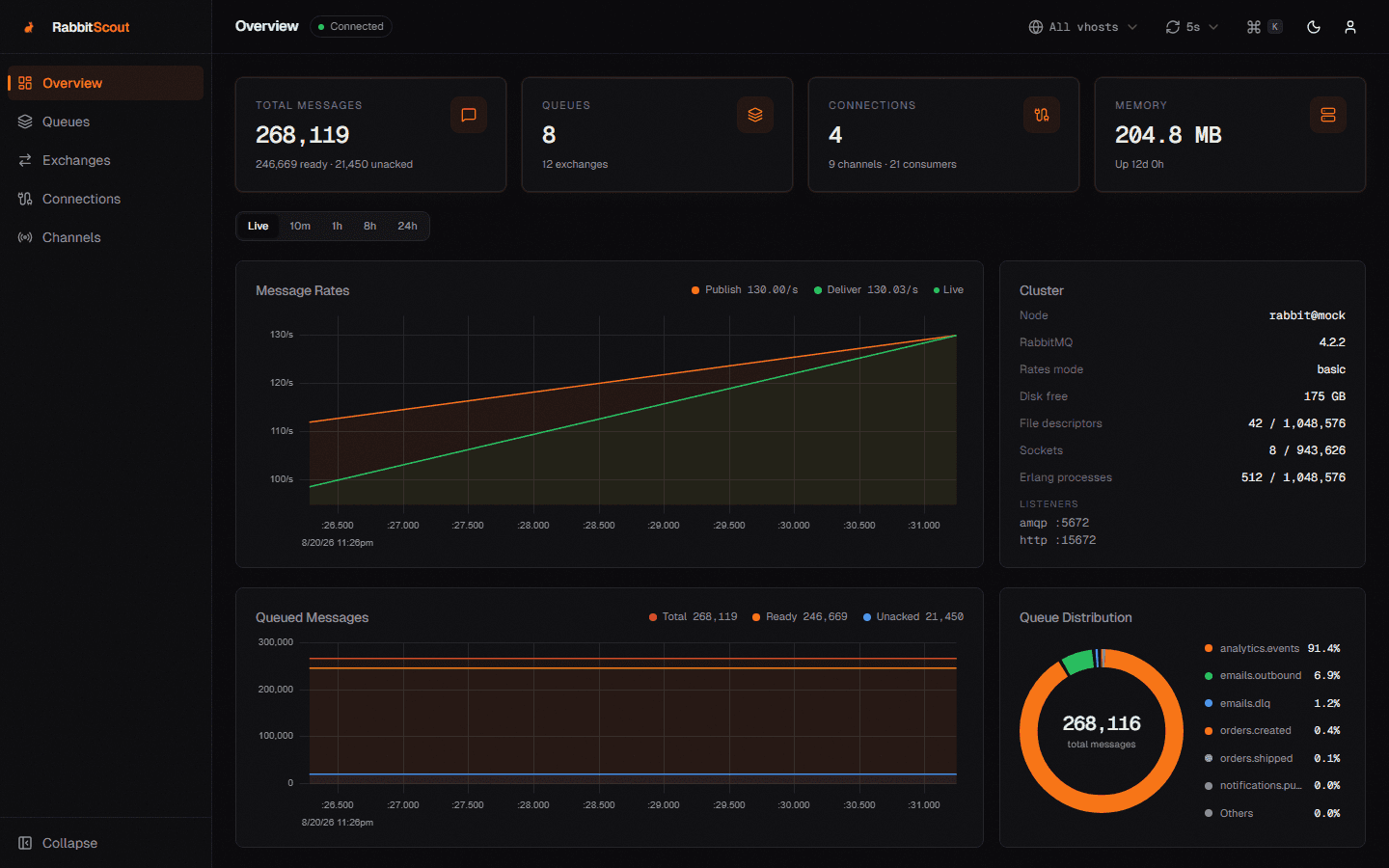
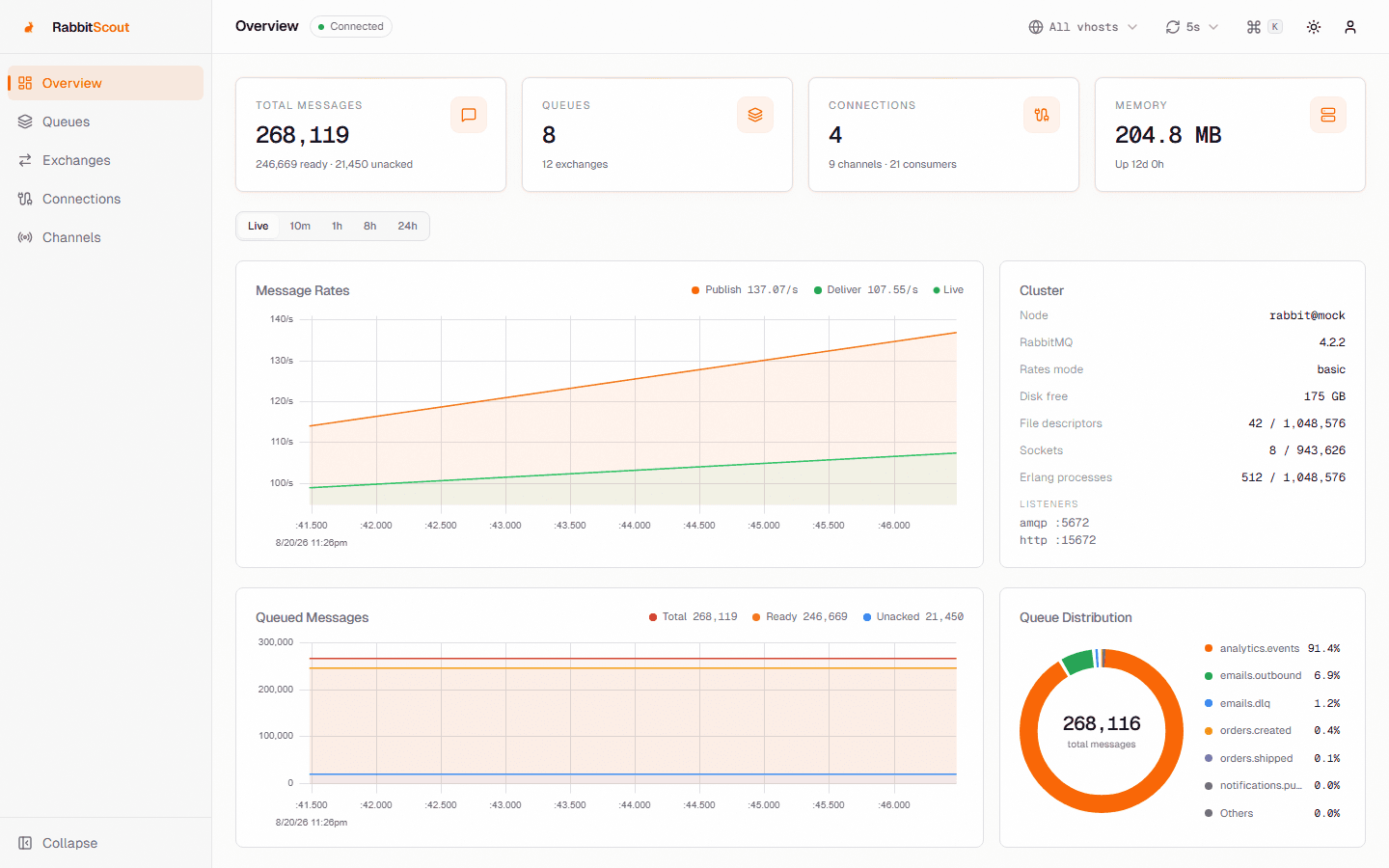
RabbitScout is an MIT-licensed Next.js dashboard that proxies the RabbitMQ management API. You deploy it (Node.js or Docker) next to a broker and each user logs in with their own RabbitMQ credentials. It offers live charts, queue and exchange management, message peeking and test publishing.
Strengths
- Free and open source (MIT)
- Modern, fast web UI with live charts and a command palette
- Shared by a whole team from one deployment
- Respects RabbitMQ user tags and permissions
Limitations
- You have to deploy, expose and maintain another web service
- One broker per deployment
- Message tooling is basic: peek and publish, no documented replay workflow
Setup and security
RabbitGUI. Install the desktop app and add a connection (management URL, credentials, optional AMQP URI). Nothing to deploy next to the broker. Runs locally and talks directly to your broker. No server in the middle, credentials stay on your machine.
RabbitScout. Deploy the Docker image (or Node.js app) with RABBITMQ_HOST/PORT/PROTOCOL environment variables, then open it in a browser. Pass-through auth: credentials are checked against the broker and kept in an httpOnly session cookie. You run and secure the extra web service yourself.
Pricing
- RabbitGUI: 29€ one-time, free updates forever
- RabbitScout: Free
Should you choose RabbitGUI or RabbitScout?
Choose RabbitGUI if…
You want deep message debugging across several brokers without deploying anything.
Choose RabbitScout if…
You want a free, shared web dashboard for one broker and are happy to self-host it.
FAQ
No. RabbitGUI costs 29€ one-time, free updates forever.
Yes. Free.
Yes, each one connects to your broker independently. A common split is RabbitGUI when you want deep message debugging across several brokers without deploying anything, and RabbitScout when you want a free, shared web dashboard for one broker and are happy to self-host it.
RabbitGUI: yes (macOS, Windows, Linux). RabbitScout: yes (Self-hosted (Node.js or Docker), any browser).
RabbitGUI lets you inspect and republish dead-lettered messages, while RabbitScout does not offer a replay workflow.
Related comparisons
Facts last verified on 2026-11-02. Sources: rabbitgui.com, GitHub: Ralve-org/RabbitScout. Spotted something outdated? Email nicolas@tggl.io and we will fix it.