Tools to inspect and replay RabbitMQ dead-letter queues (2026)
Dead-letter queues fill up when messages are rejected, expire or exceed a queue limit. Getting them out again, ideally only the ones you fixed, is where most RabbitMQ tools struggle. Here is what each option can and cannot do.
Disclosure: we make RabbitGUI. Competitor facts are sourced at the bottom of the page.
How we compared them
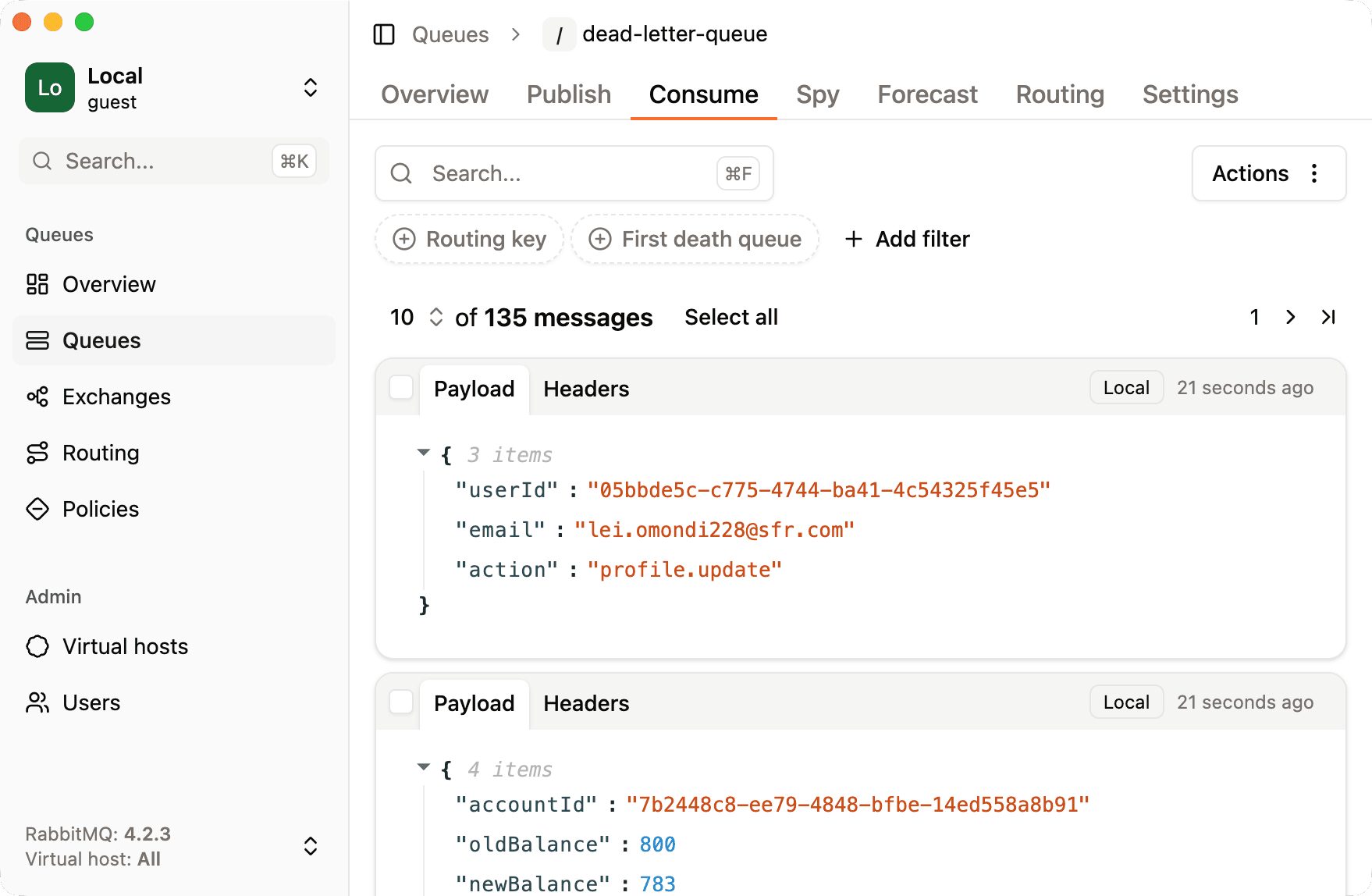
- Can you read the x-death headers to see why a message was dead-lettered?
- Can you filter and pick only some messages?
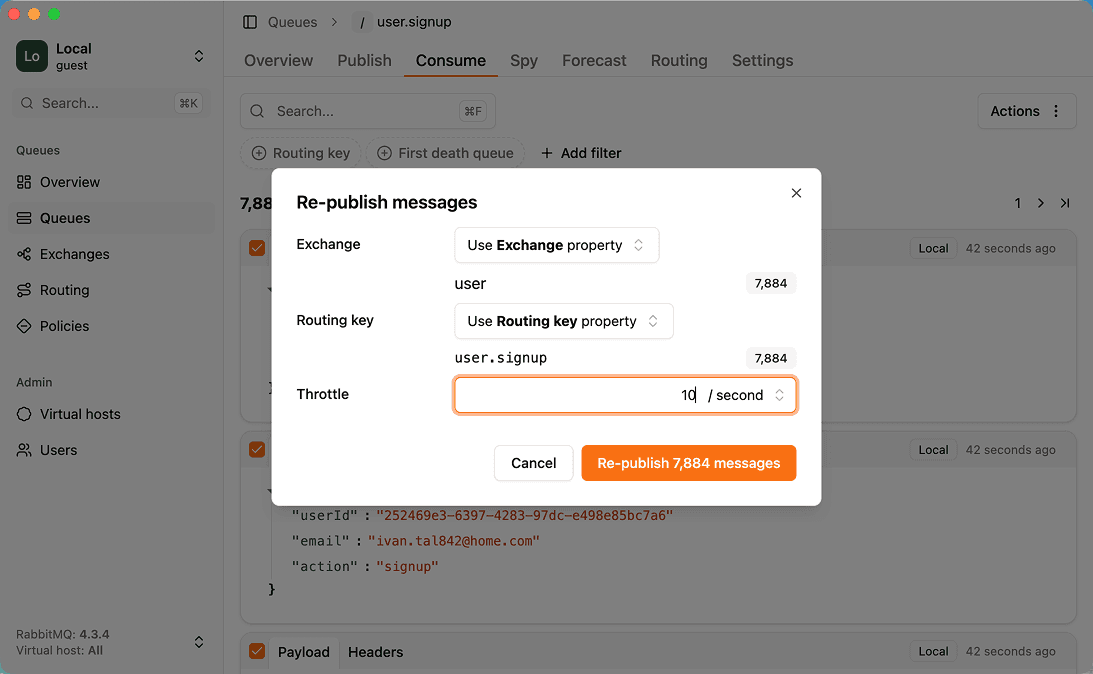
- Can you republish to the original queue, and throttle it?
Quick comparison
| Capability | RabbitGUI | QueueExplorer | Management UI | rabbitmqadmin | RabbitScout |
|---|---|---|---|---|---|
| Browse messages safelyLook at the messages sitting in a queue without losing them or disturbing consumers. | YesCopies messages to a local store, with requeue or removal, then lets you inspect them at no cost to the broker | YesProgressive loading with a configurable limit, streams by offset | Partly"Get messages" consumes messages and optionally requeues them, which changes order and redelivery flags | Partly"get" consumes and optionally requeues, like the Management UI | PartlyPeek messages with pagination through the management API |
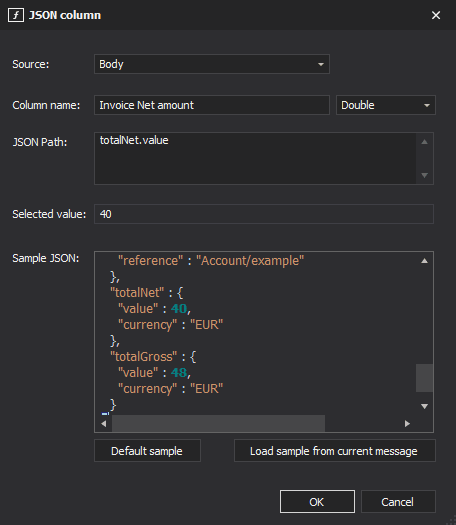
| Search & filter messagesFind specific messages by body, headers or properties instead of paging through them one by one. | YesSearch and filter extracted messages | YesFilter loaded messages, Professional extracts values with JSON, XPath or regex | NoNo message search or filtering | NoPipe the output to grep or jq | PartlySorting of peeked messages |
| Replay dead lettersRe-publish failed or dead-lettered messages back to a queue or exchange. | YesRepublish selected messages anywhere, with throttling | YesInspect dead-letter headers and replay | PartlyOnly with the shovel plugin ("Move messages"), whole queue at a time | PartlyScriptable by hand | Not documented |
| Bulk actionsAct on many queues or messages at once (purge, delete, move). | YesBulk purge and other bulk actions | YesCopy, move, delete or save selected messages | No | PartlyScriptable | Not documented |
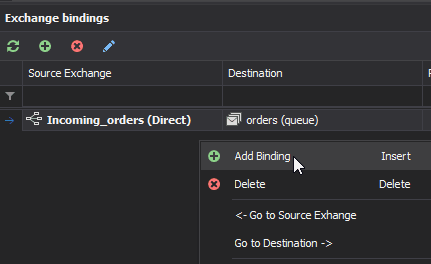
| Visual routing graphSee how exchanges, bindings, dead-letter and alternate exchanges connect. | YesInteractive graph including dead-letter and alternate exchanges | Not documented | PartlyBindings listed per exchange or queue, no graph | No | PartlyInspect and add bindings, no graph |
1. RabbitGUI
Desktop app · macOS, Windows, Linux · 29€ one-time, free updates forever
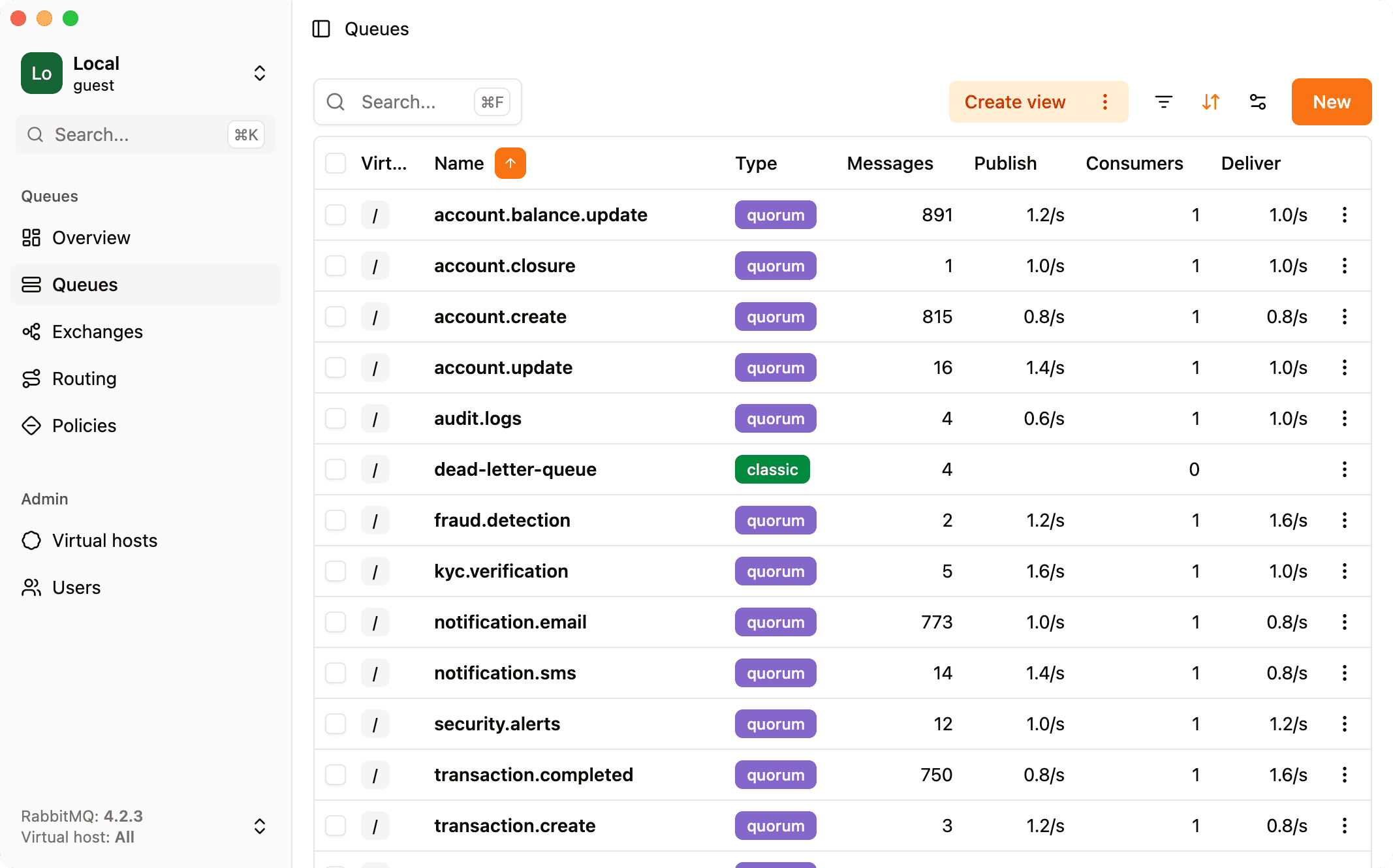
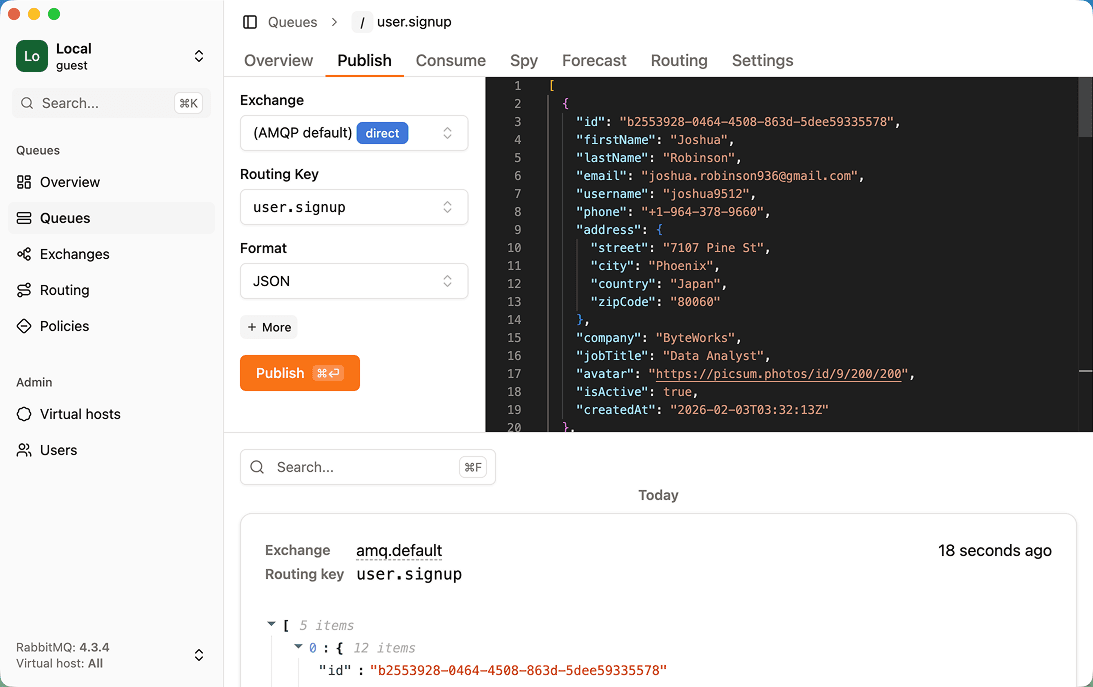
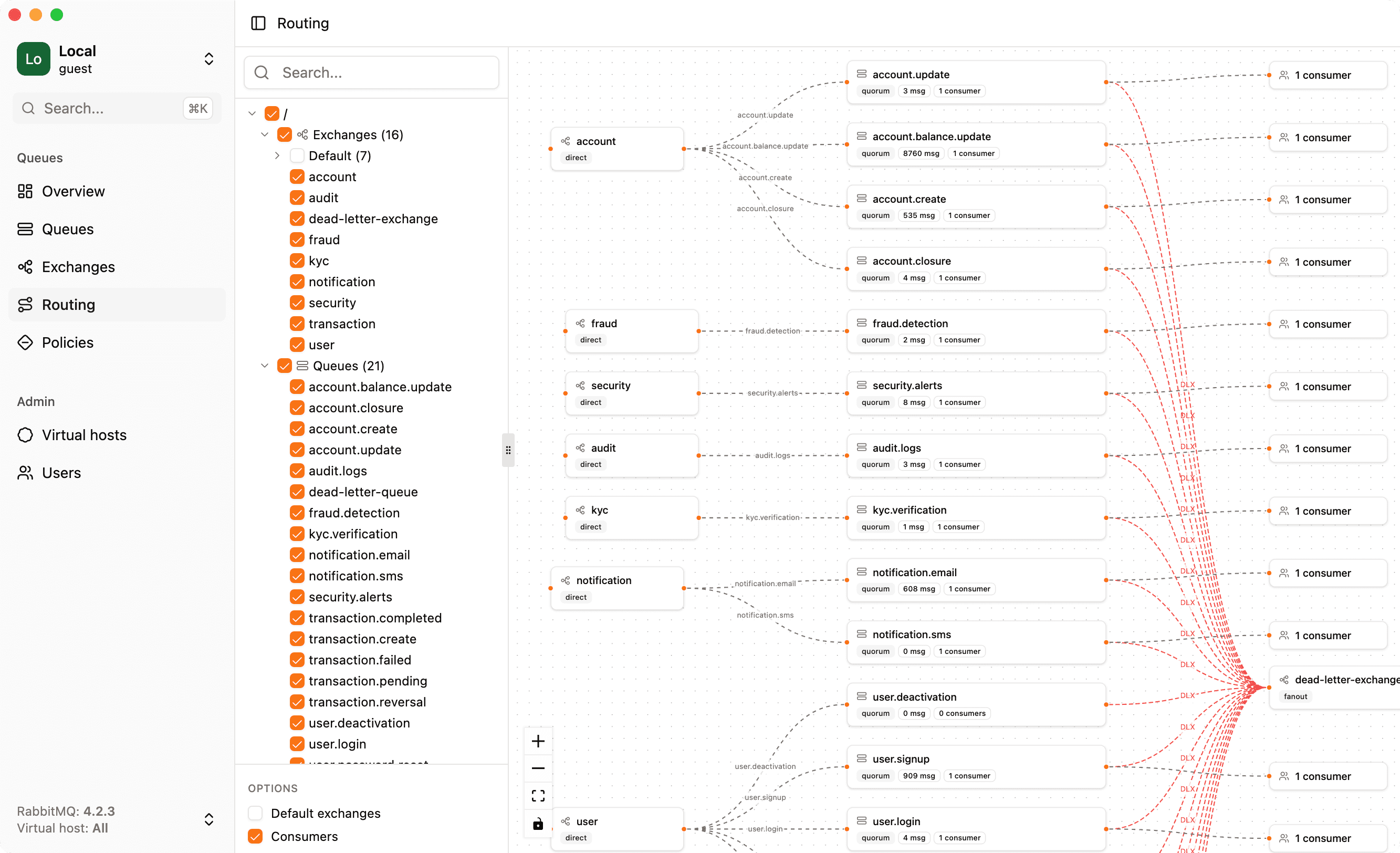
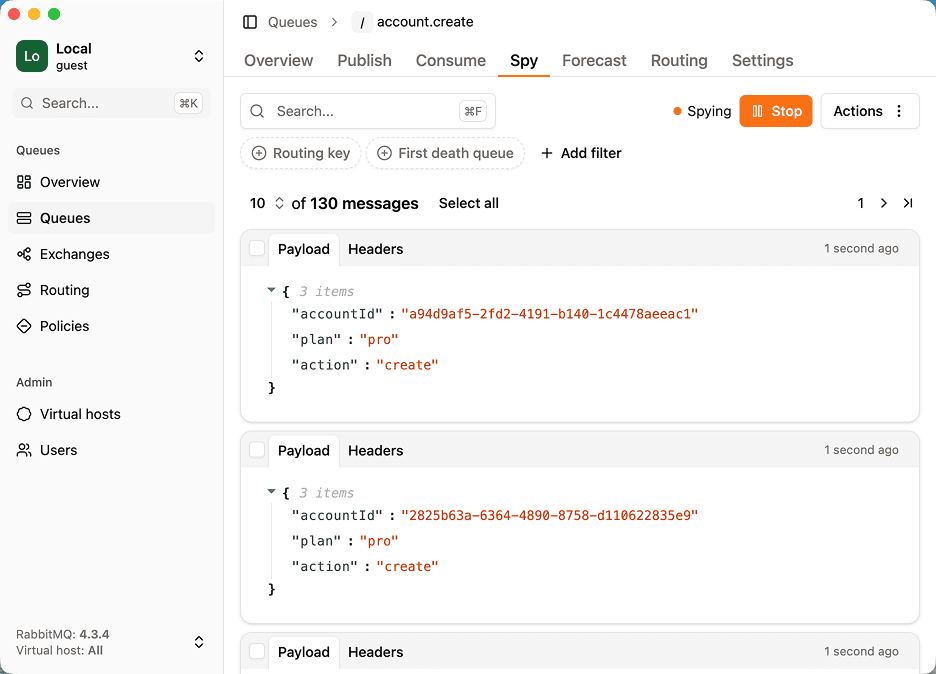
RabbitGUI is a desktop app for macOS, Windows and Linux that connects to your brokers through the management API. It focuses on day-to-day debugging: browsing and filtering messages, replaying dead letters, spying on live traffic, and visualizing routing.
Strengths
- Dead-letter workflow: inspect, filter and republish failed messages with throttling
- Non-destructive live spy on any queue
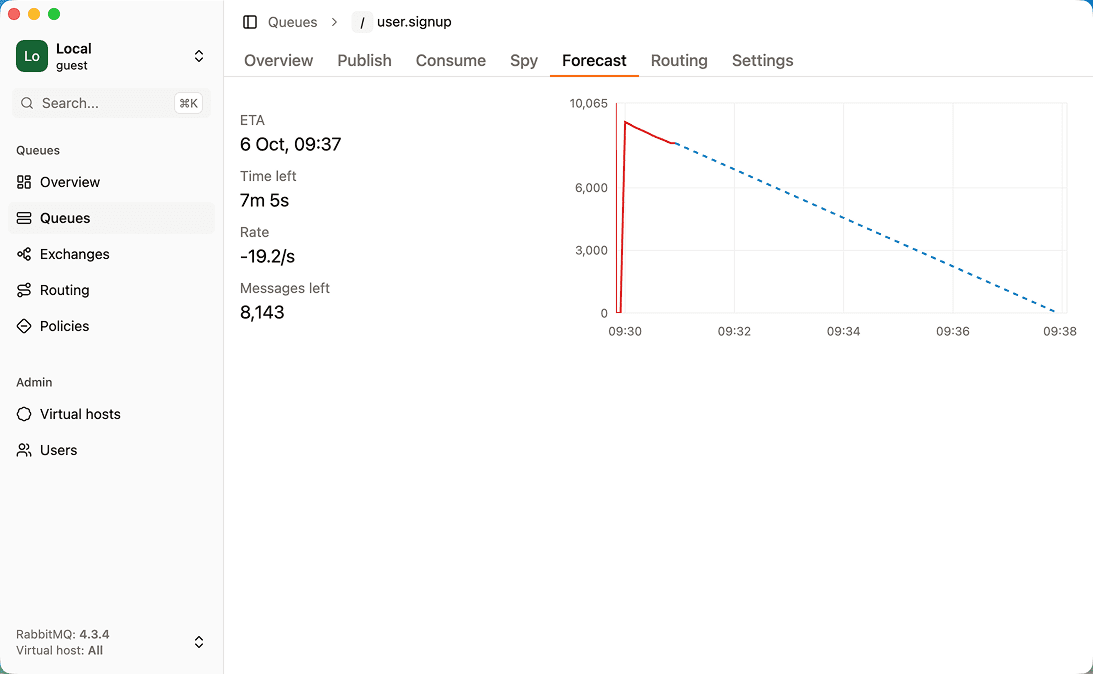
- Routing graph, drain-time forecast and policy debugger are unique among RabbitMQ tools
- Native app on macOS, Windows and Linux with nothing to deploy
- Low one-time price with free updates forever and a 30-day refund
Limitations
- Paid (no free tier or trial, a 30-day money-back guarantee instead)
- RabbitMQ only
- Needs the management plugin enabled, like most RabbitMQ tools
- Not a team-wide always-on dashboard: it runs on each developer machine
Best for: Developers who debug RabbitMQ queues, messages and dead letters regularly and want a fast desktop tool. See RabbitGUI in action.
2. QueueExplorer
Desktop app · Windows, macOS, Linux · $149 per computer (Standard) or $249 (Professional)
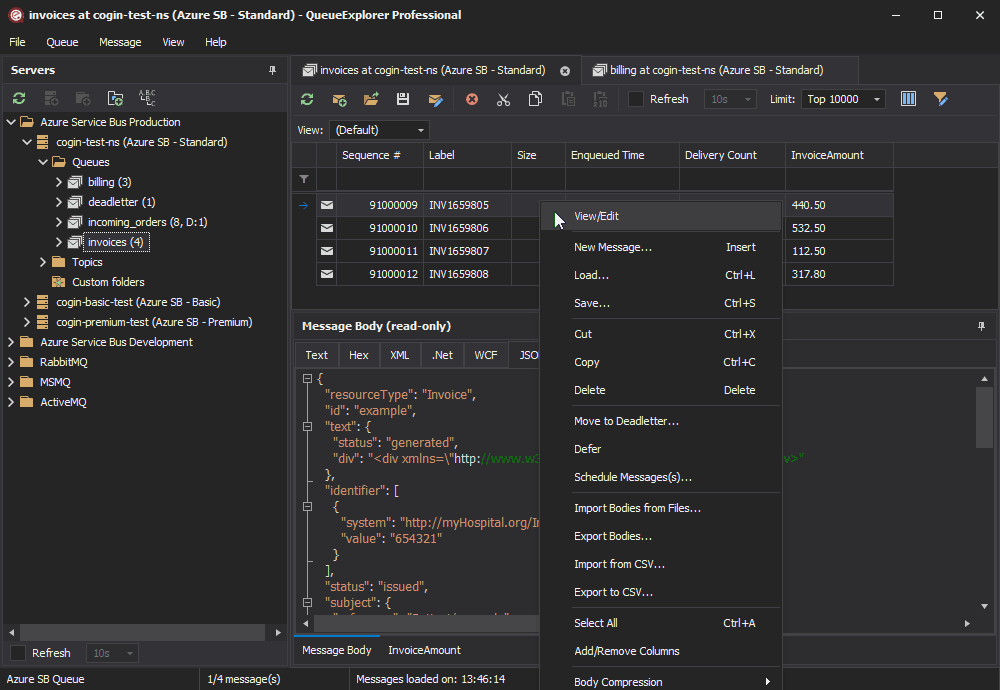
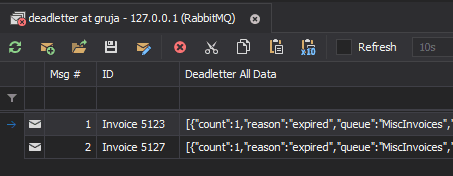
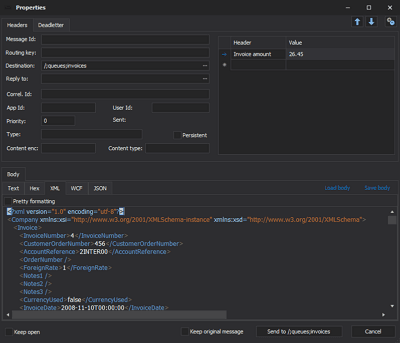
QueueExplorer by Cogin is a long-standing desktop tool for message-level work on several brokers. For RabbitMQ it loads queue messages progressively, browses streams by offset, filters on bodies and headers, and lets you edit, copy, move, save and replay messages.
Strengths
- Supports several brokers in one tool (RabbitMQ, Azure Service Bus, MSMQ, ActiveMQ)
- Mature message editing: edit, copy, move, save to files and reload
- Browses RabbitMQ streams by offset
- Free trial on every platform
Limitations
- Priced per computer: $149 (Standard) or $249 (Professional)
- Licence includes 12 months of updates, extra years are paid
- Advanced filtering (JSON/XPath/regex columns) requires Professional
- Focused on messages: no routing graph or drain forecast documented
Best for: Teams working with several message brokers, or who need heavy message editing and stream browsing. See QueueExplorer alternatives.
3. RabbitMQ Management UI
Web UI · Any browser · Free (bundled with RabbitMQ)
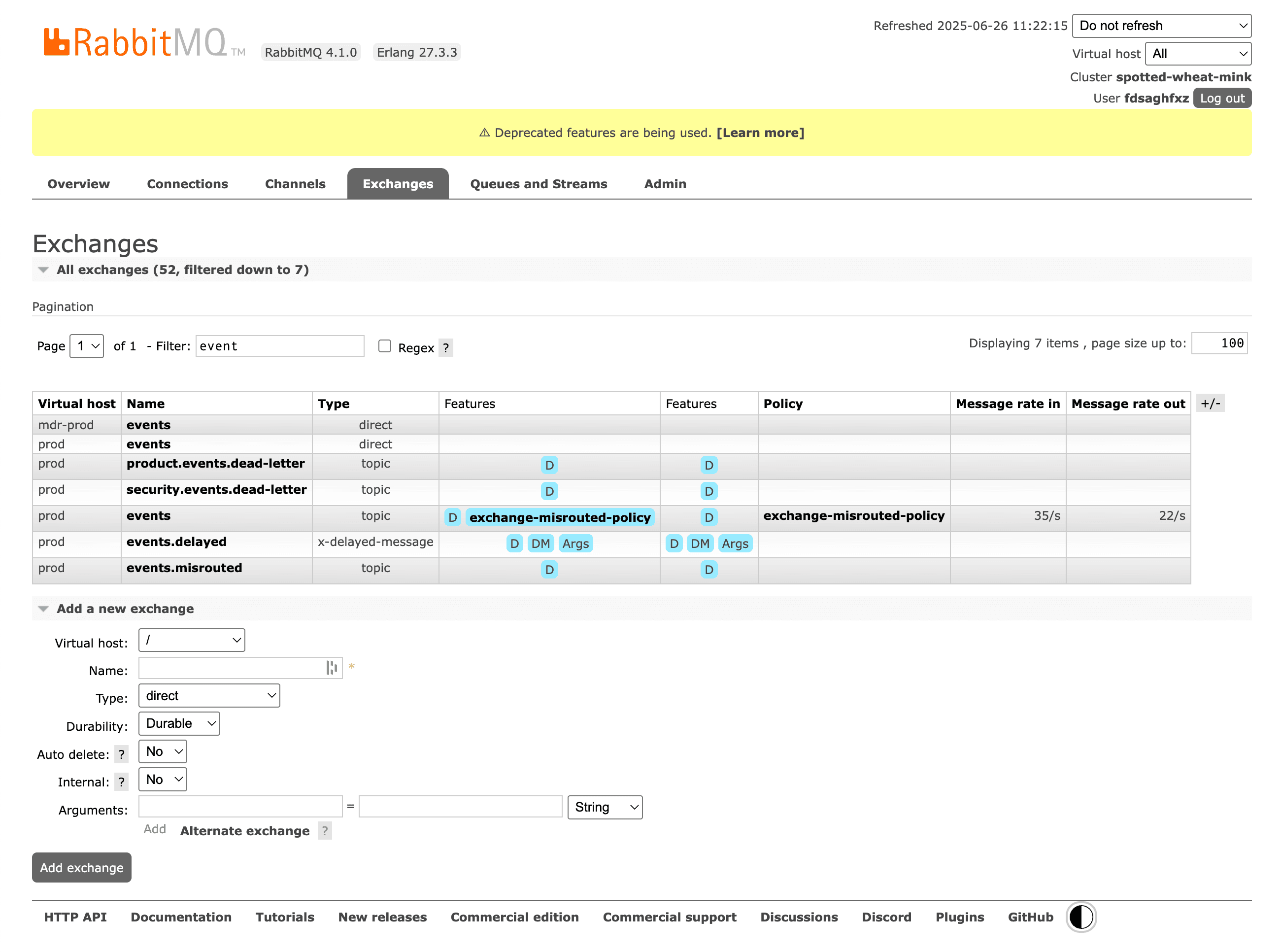
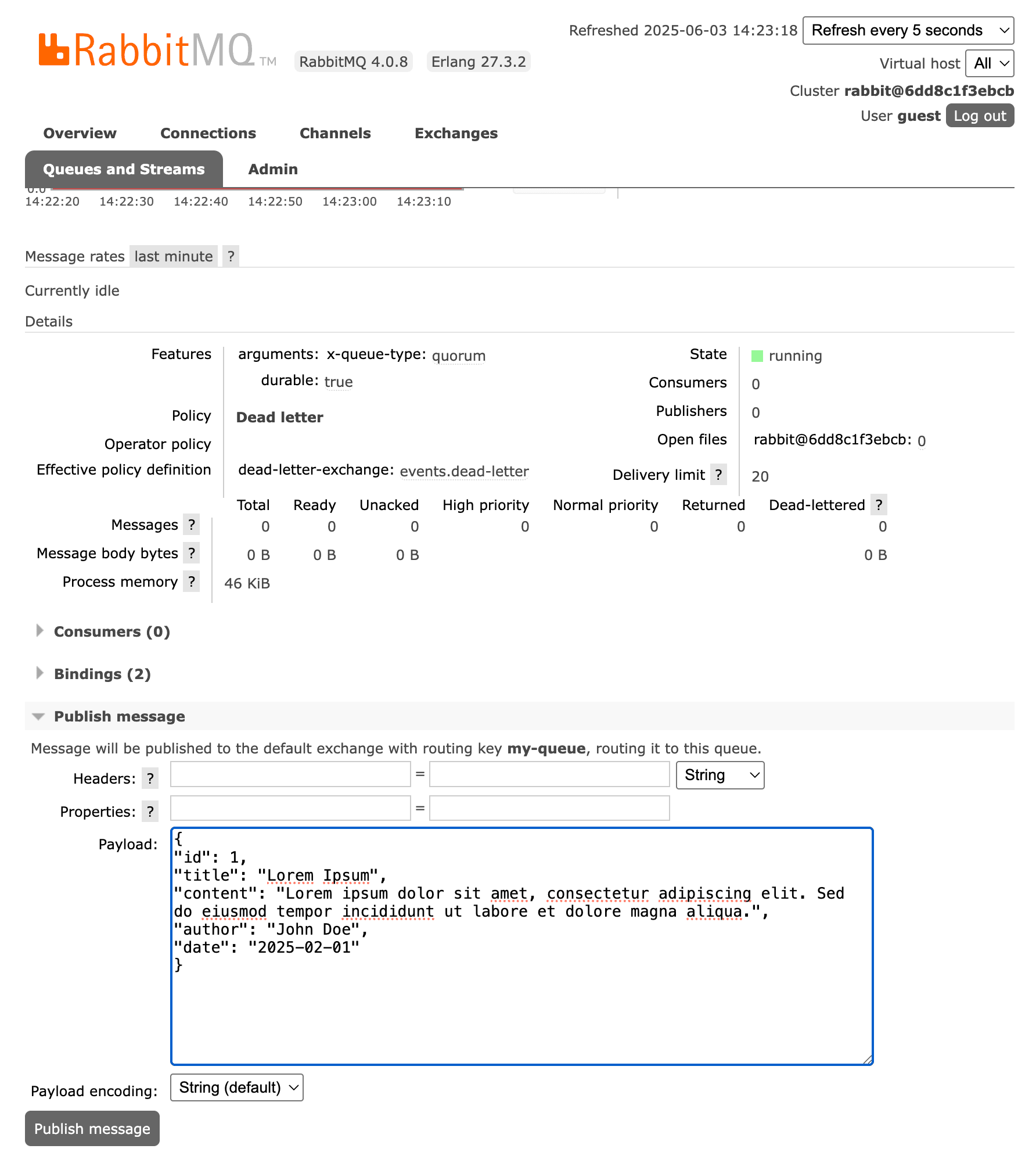
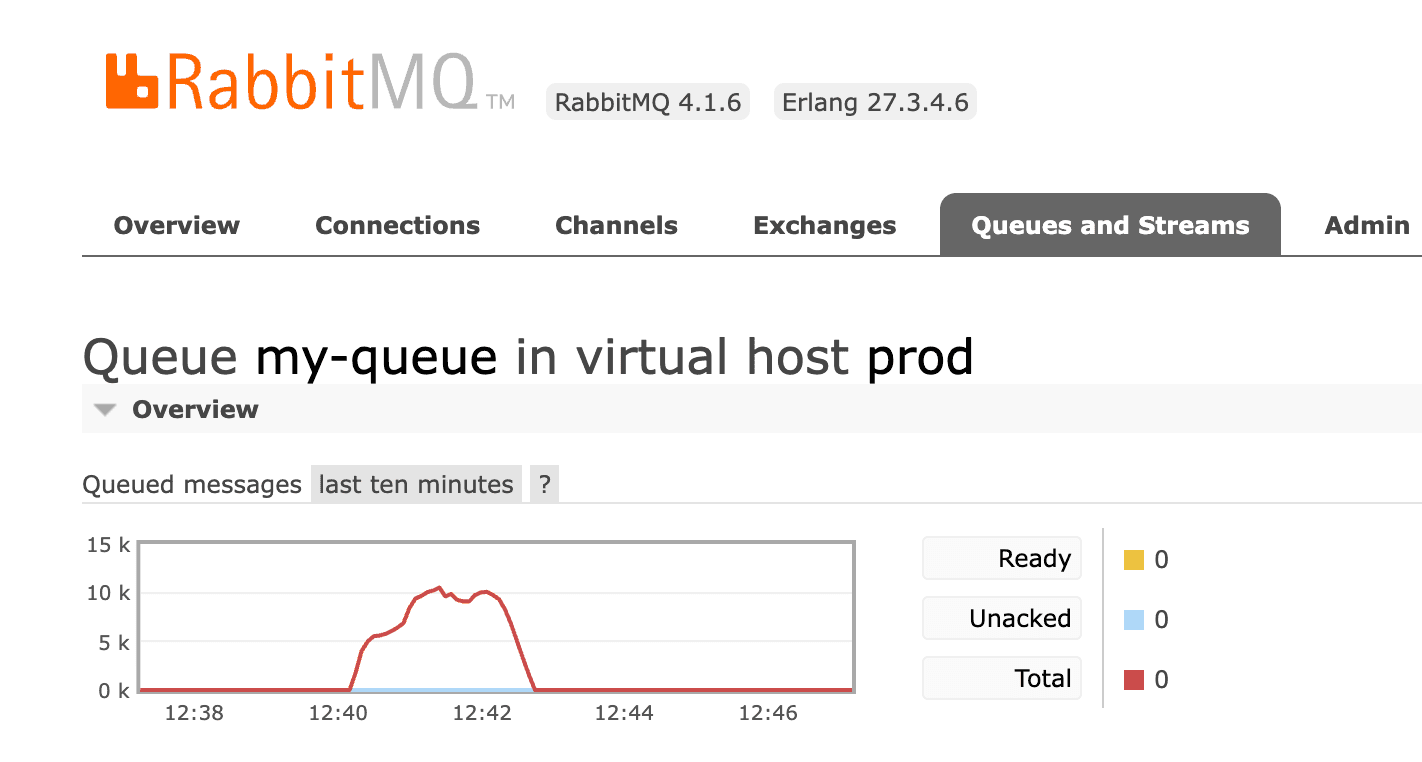
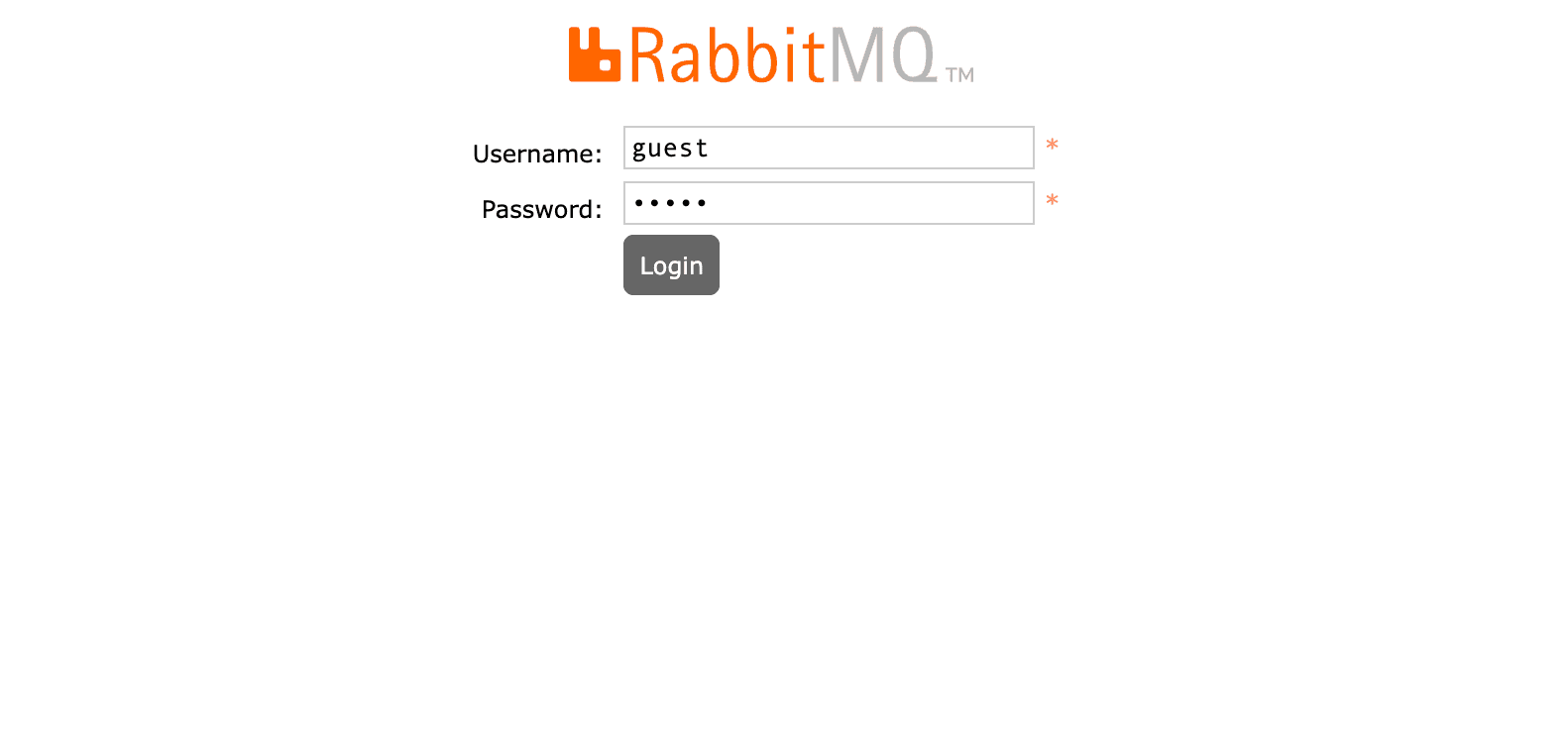
The Management UI ships with RabbitMQ as the rabbitmq_management plugin and is served on port 15672. It covers broker administration well: users, vhosts, permissions, policies, queues, exchanges, connections and basic charts.
Strengths
- Free and already installed with most RabbitMQ setups
- Complete administration: users, vhosts, permissions, policies, feature flags
- Officially maintained by the RabbitMQ team
- Works from any browser, nothing to install on your machine
Limitations
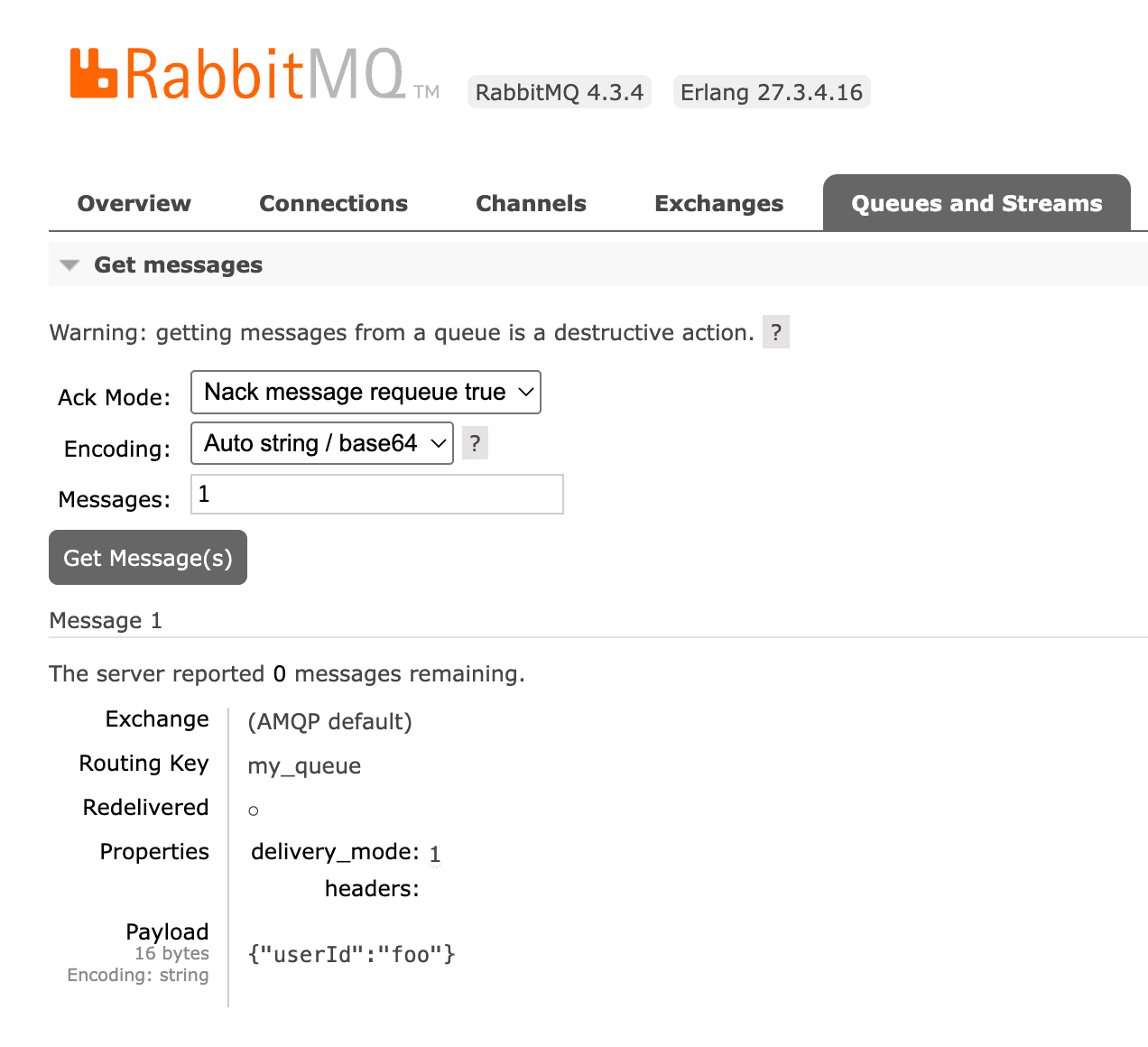
- No safe way to browse a queue: "Get messages" is a consume plus requeue
- No message search, filtering or selective replay
- One broker at a time, credentials re-entered per environment
- Slow and cluttered with thousands of queues
Best for: Broker administration (users, permissions, policies) and quick checks when nothing else is installed. See RabbitMQ Management UI alternatives.
4. rabbitmqadmin
CLI · macOS, Windows, Linux · Free
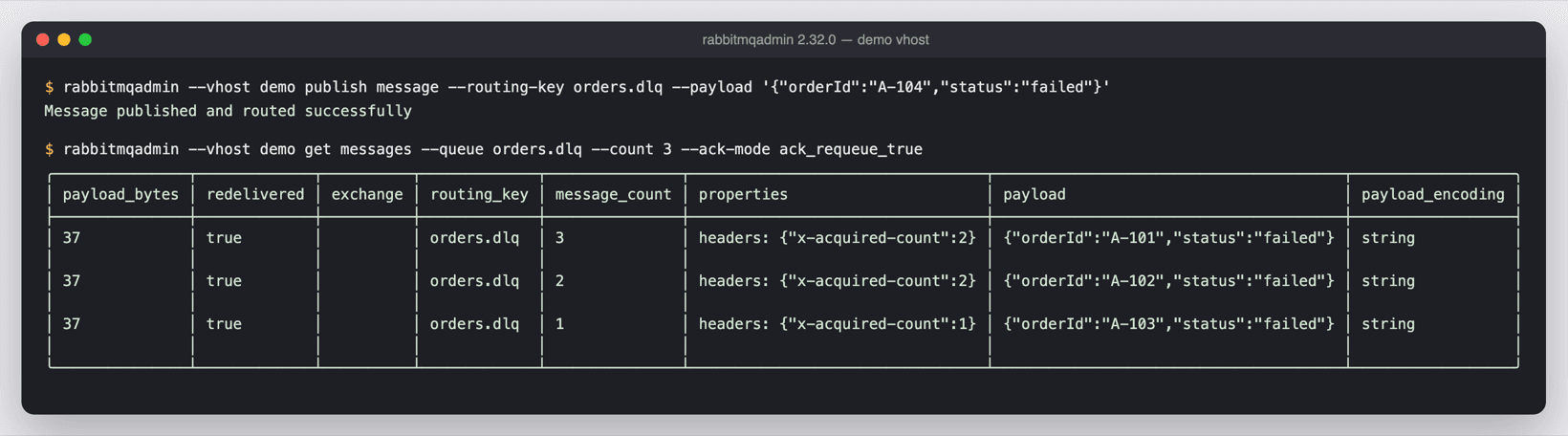
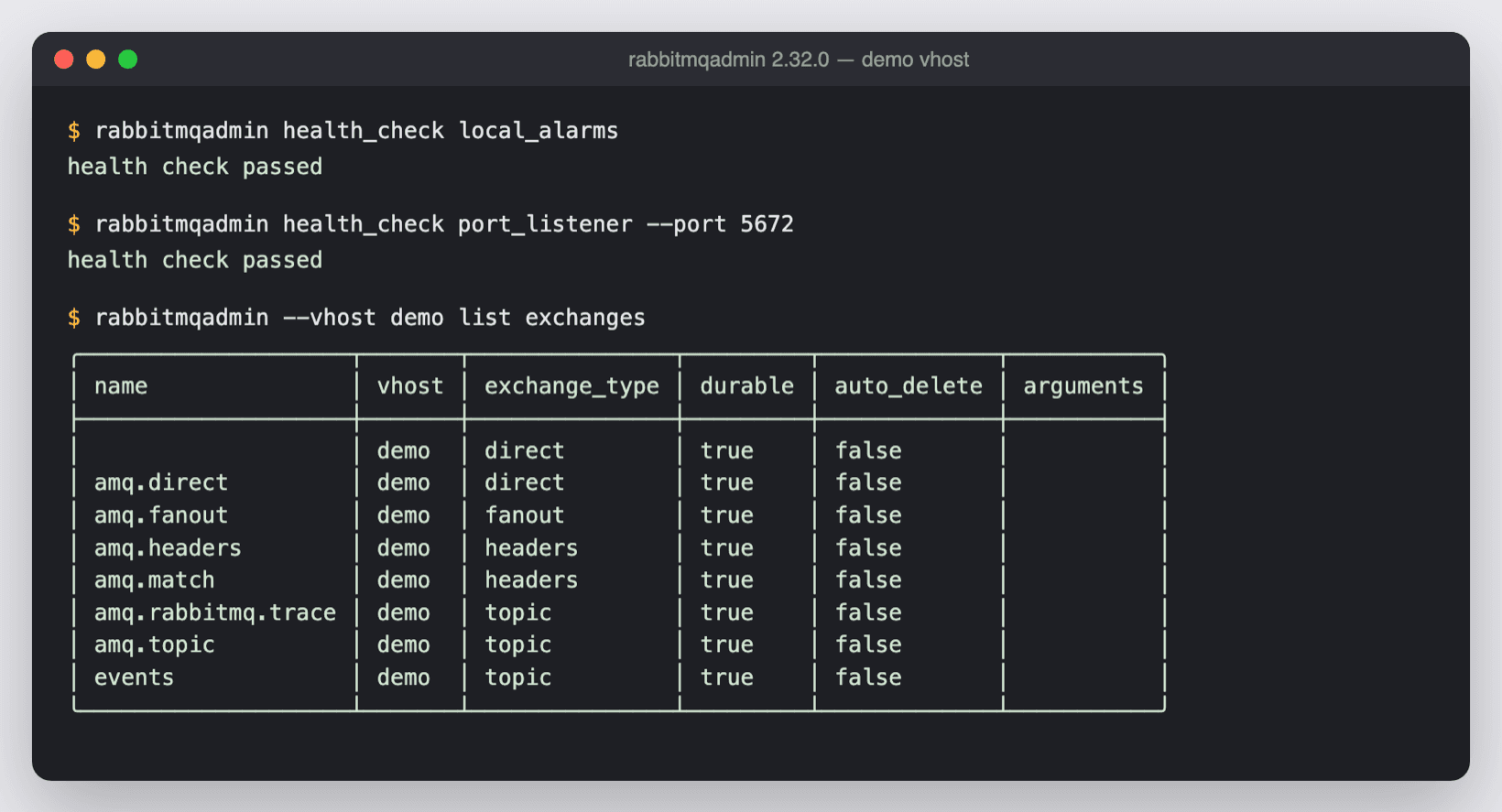
rabbitmqadmin is the official CLI for the RabbitMQ HTTP API. It lists and declares queues, exchanges and bindings, publishes and gets messages, and exports or imports definitions, which makes it ideal for scripts and CI.
Strengths
- Free and official
- Perfect for automation, CI and definitions import/export
- Works over SSH and in containers
Limitations
- Text output: inspecting payloads and routing is tedious
- Same destructive "get" as the Management UI
- No visual overview of routing or queue health
Best for: Scripting, CI pipelines and server-side automation. See rabbitmqadmin alternatives.
5. RabbitScout
Self-hosted web dashboard · Self-hosted (Node.js or Docker), any browser · Free
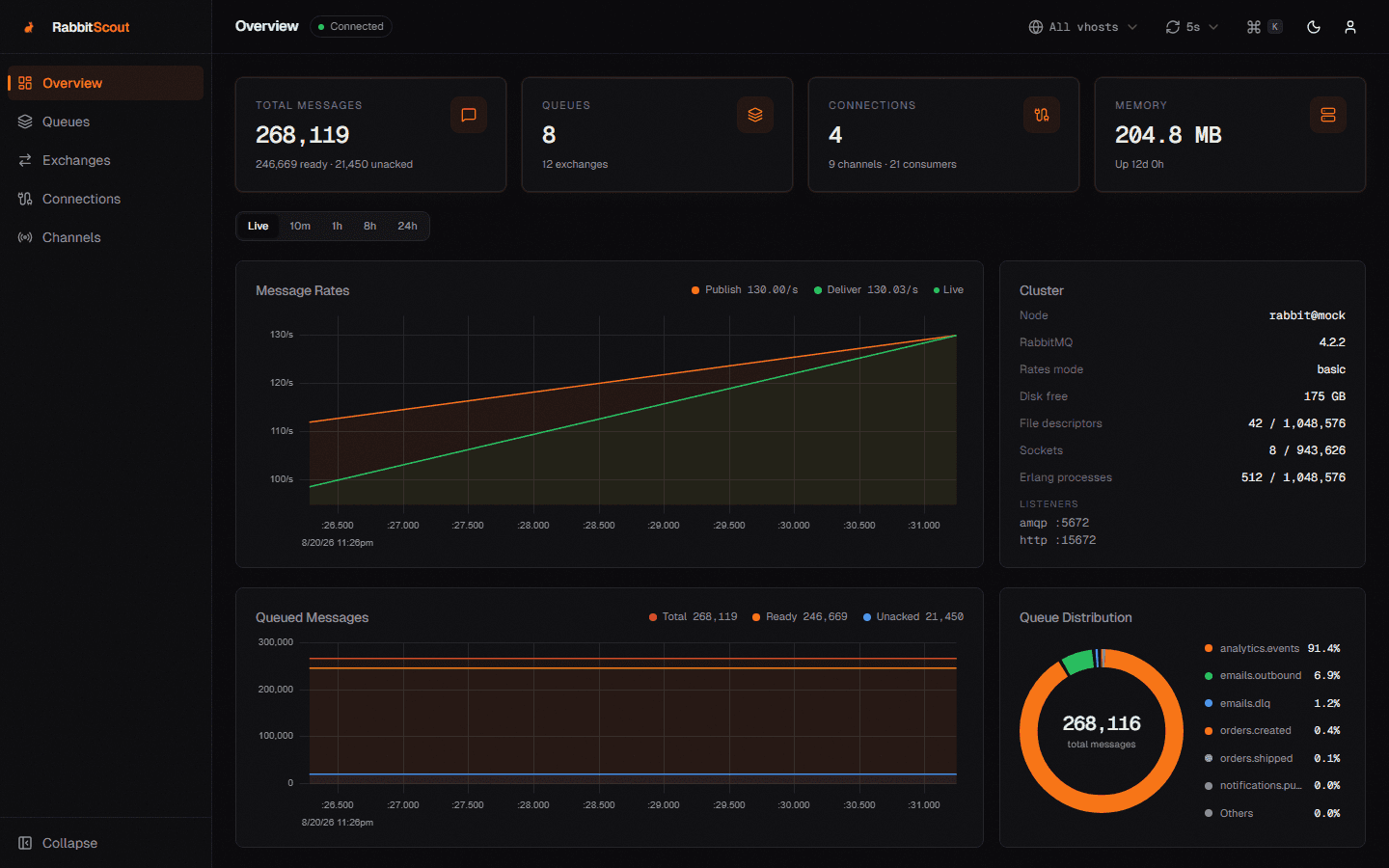
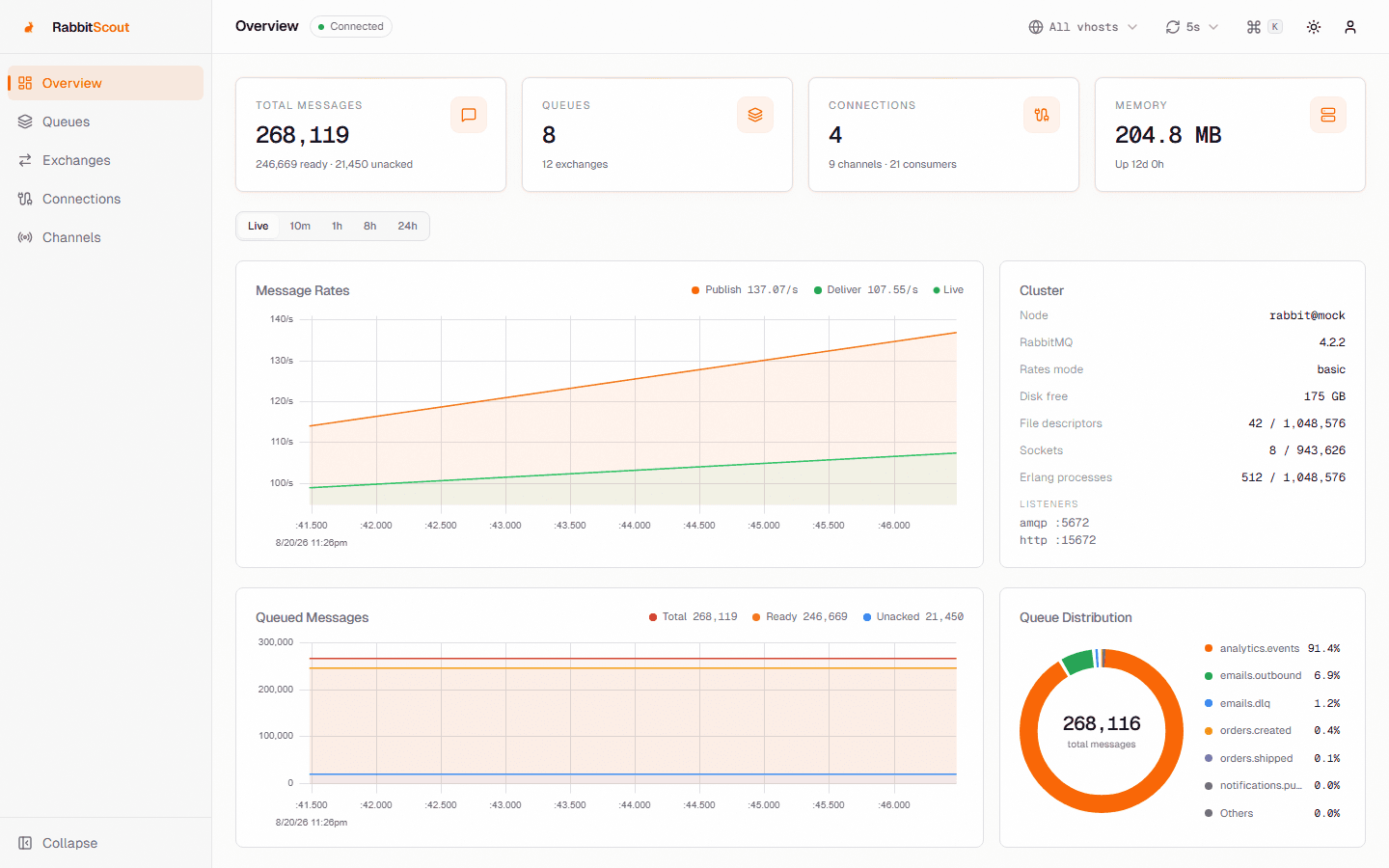
RabbitScout is an MIT-licensed Next.js dashboard that proxies the RabbitMQ management API. You deploy it (Node.js or Docker) next to a broker and each user logs in with their own RabbitMQ credentials. It offers live charts, queue and exchange management, message peeking and test publishing.
Strengths
- Free and open source (MIT)
- Modern, fast web UI with live charts and a command palette
- Shared by a whole team from one deployment
- Respects RabbitMQ user tags and permissions
Limitations
- You have to deploy, expose and maintain another web service
- One broker per deployment
- Message tooling is basic: peek and publish, no documented replay workflow
Best for: Teams who want a free, modern, shared web dashboard and are happy to self-host it. See RabbitScout alternatives.
Doing it without a GUI
With only the broker, you can move a whole dead-letter queue back with a shovel (the Management UI exposes this as "Move messages" when the shovel management plugin is enabled), or write a small consumer that reads each message, decides, and republishes it. Both work, but neither lets you look before you leap.
Read our guides on setting up dead-letter queues and retry vs dead-letter queues for the topology side.
FAQ
Either shovel the whole queue back (Management UI "Move messages" with the shovel plugin), write a consumer that republishes, or use a GUI like RabbitGUI or QueueExplorer to select and republish specific messages.
Yes, RabbitMQ adds an x-death header with the reason (rejected, expired, maxlen, delivery_limit), the original queue and a count. Any tool that shows headers lets you read it.
More comparisons
Facts last verified on 2026-11-02. Sources: rabbitgui.com, Cogin: pricing, Cogin: RabbitMQ GUI, RabbitMQ docs: Management Plugin, RabbitMQ docs: management CLI, GitHub: Ralve-org/RabbitScout. Spotted something outdated? Email nicolas@tggl.io and we will fix it.